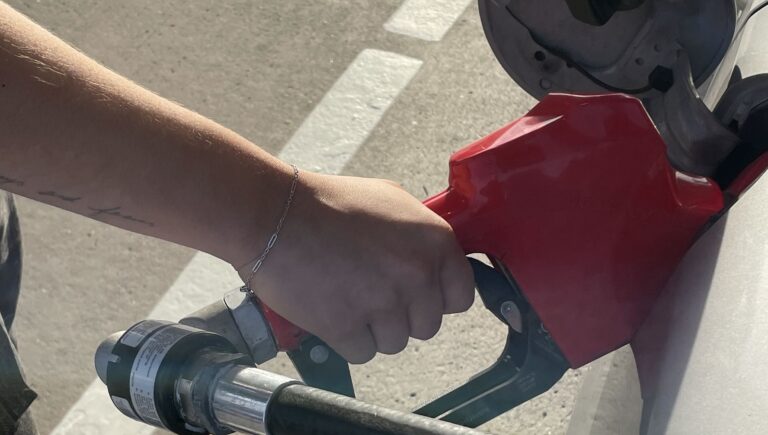




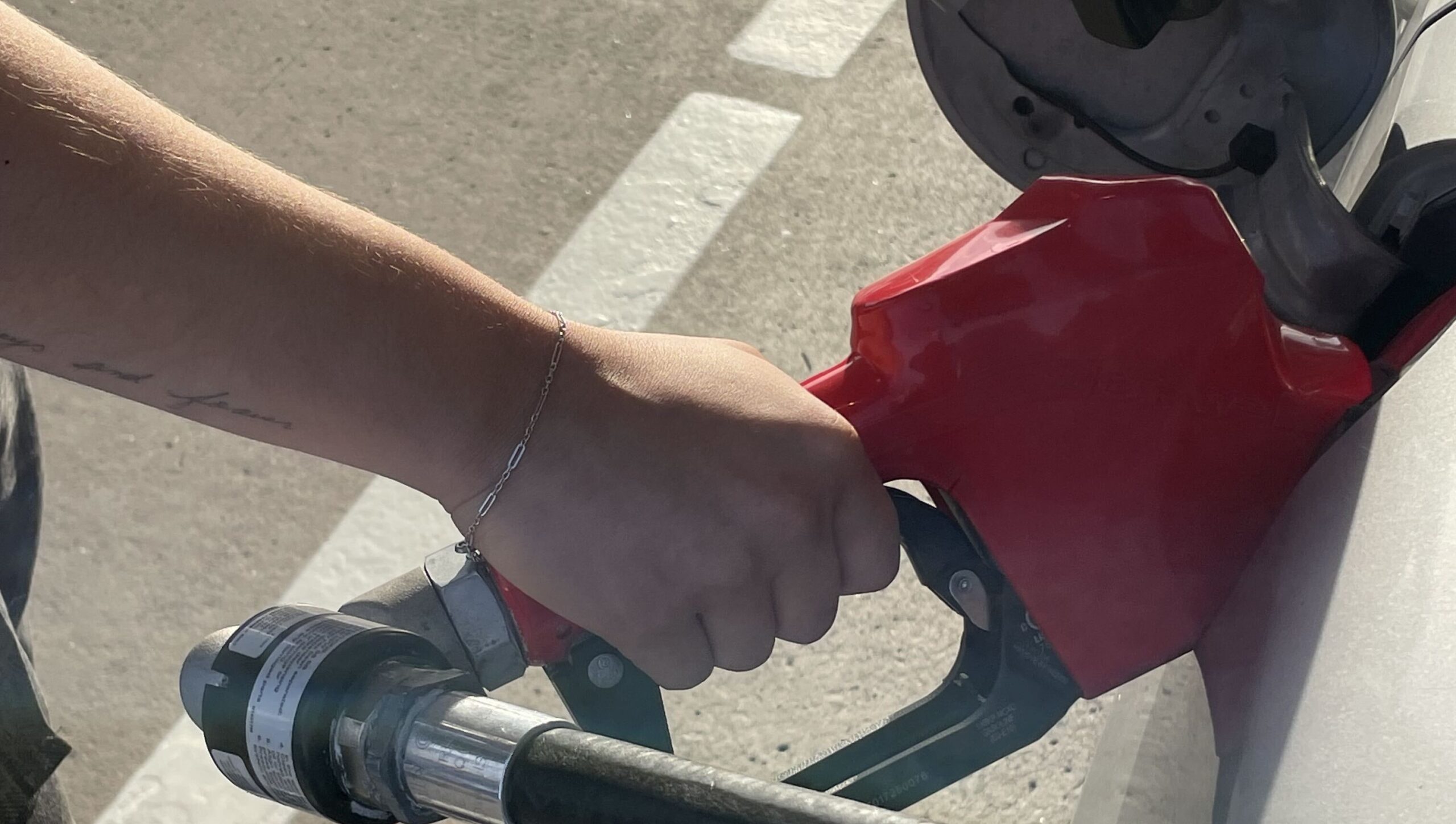
Cover Photo Credit: Grace Schramek
As many New Brunswick university students already know, gas prices are egregious. According to the CBC, in 2026, Canadians will pay around $231 per month on gasoline.
A UNBF commuter student (anonymity requested), stated that she’s had to “rework [her] budget entirely” due to the everpresent economic struggle society is facing, she said “something vital such as gas rising in price does not help.” She claimed that she only goes out if “absolutely necessary,” considering that it’s a 15-minute commute into the city of Fredericton everyday for school. She expressed that she now finds herself “watching the gas meter with anxiety, fearing the day [she has] to fill the tank.”
The people want an escape; however, the popular coping mechanism of driving until the tank is empty is no longer viable. Even driving ten minutes for a coffee seems like an irresponsible financial decision. This feeling of constant anxiety and financial dread leads us to consider: what is really responsible for raising the price at the pump? The answer is complex.
Geopolitical conflicts seem to be ever present in 2026. Donald Trump started the war with Iran on February 28th 2026, claiming it would only last a few weeks; it has now been over 200 days. Iran is considered one of the top producers of crude oil globally, with 20% passing through the Strait of Hormuz for distribution. Due to safety concerns for Iranian citizens, the Strait of Hormuz has been shut down for over 200 days, having a significant impact on the availability of the heavily relied upon resource worldwide.
One renewable alternative is the use of ethanol (the primary chemical compound in alcohol, made by fermenting crops such as corn and wheat) in gasoline. In 2010, Canadian companies were mandated to ensure 5% of their gasoline contained ethanol as per the Renewable Fuel Regulations. Many provinces have by now switched to a 10% blend, and it is estimated that by 2030, the concentration will rise to 15% as E15 gas has already been approved in Canada. According to Natural Resources Canada, there are no barriers to E15 or higher E20-E25 blends in Canada as of 2026.
Gasoline was first mixed with small amounts of ethanol in the 1930s. However, over the course of time, oil suppliers have been mixing ethanol and gasoline more frequently and rapidly under times of duress. Examples include its creation during the Great Depression, its rise in popularity during World War II, and during the 1970s when researchers realized it emanates lower amounts of carbon emissions than typical gasoline.
While this may sound like the most viable option in our current economic climate, vehicle owners should be warned that the age of their car can impact whether or not ethanol will cause damage over time. While most modern vehicles are able to keep up with elevated rates, any vehicle created prior to 2001 will face a decrease in fuel economy, as well as a potentially eroded engine if using gas with more than 10% ethanol frequently.
What does this mean for Canadians struggling to make ends meet? As gas prices continue to rise, it may be time for Canadians to consider alternative modes of transport. New MoVe scooters available for rent for $20 per hour via a mobile app have been popping up everywhere around Fredericton. On June 22nd 2026 a new bus route was also added close to UNB called the 300 Campus Connect so students have more budget-friendly options to get around. For students who have to commute from farther away, however, the issue of accessible transportation remains.
If you are looking into alternative transportation in Fredericton, you can obtain bus passes from these locations.