



Cover Photo Credit: Micheal Tapper
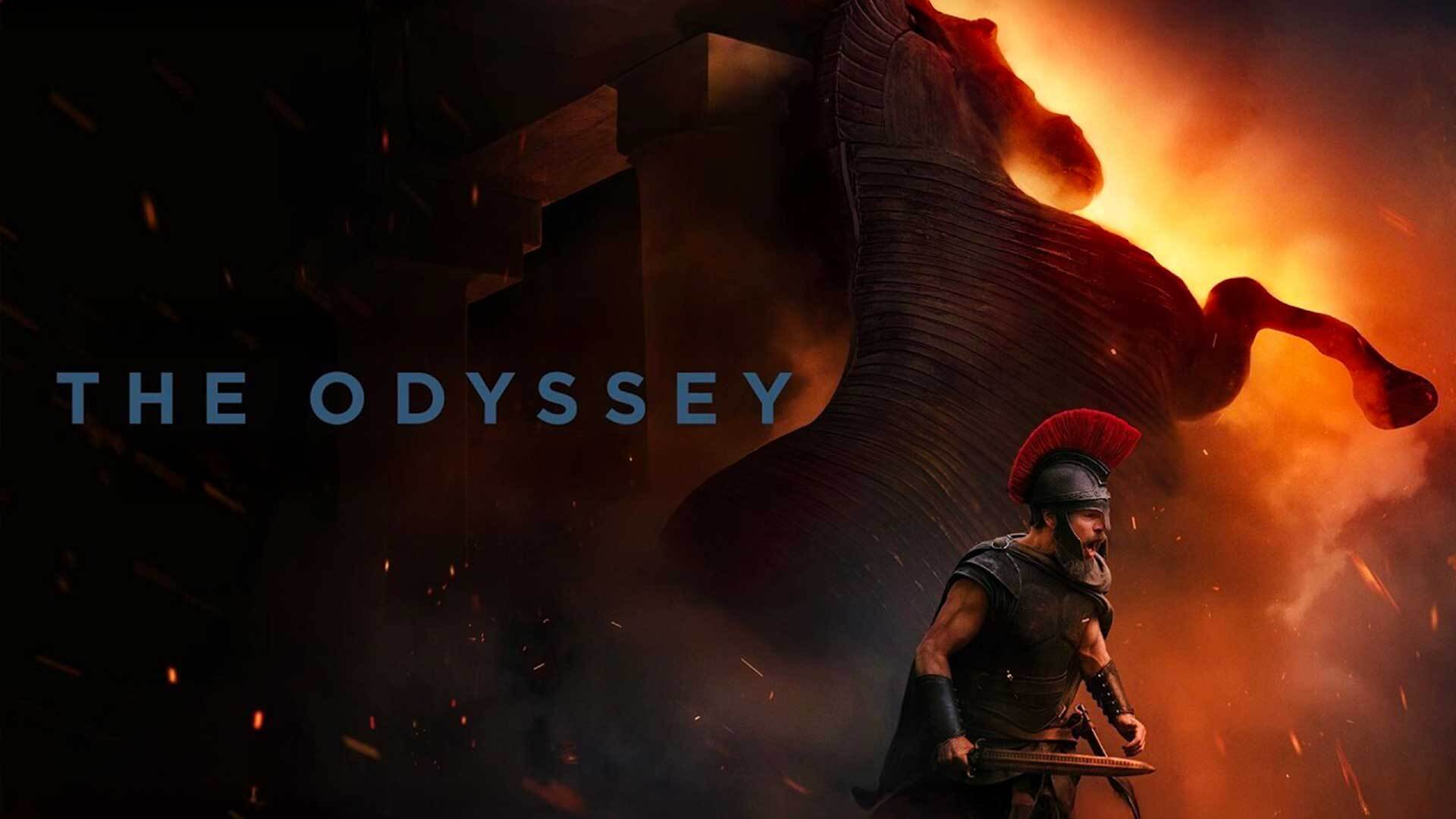
Oscar-winning director Christopher Nolan’s highly anticipated The Odyssey was released on July 17th 2026, bringing in $124 million at the box office during its first week in theatres. The film boasts many standout performances with Samantha Morton as Circe, Matt Damon as Odysseus, and Anne Hathaway as Queen Penelope.
Nolan’s The Odyssey is the first feature-length film in cinema history to be shot entirely on IMAX, otherwise known as 15/70mm film. However, the majority of long-time Nolan fans and film lovers are far from ecstatic regarding some production choices.
Only 9 Canadian cities have a theatre available for screening The Odyssey in IMAX, as Nolan filmed it and intended viewers to see it, the closest to Fredericton being over a province away in Halifax. Similarly, the United States only has 25 theatres nationwide that can screen films in IMAX. Limited access to art seems to be ever-present in today’s society, which raises the question: is being the early adopter worth it if it hinders your fans’ experience?

Over the course of his directing career, Nolan continuously made a name for himself as a risk taker. According to Digital Camera World, Nolan spent at least $1.5 million on IMAX cameras, with one camera being about 500k alone. There are only about 8–10 IMAX cameras in the world. Additionally, Nolan himself admitted in interviews and behind-the-scenes footage that 3 IMAX cameras were destroyed over the course of a decade while filming The Dark Knight (2008), The Dark Knight Rises (2012), and Dunkirk (2017).

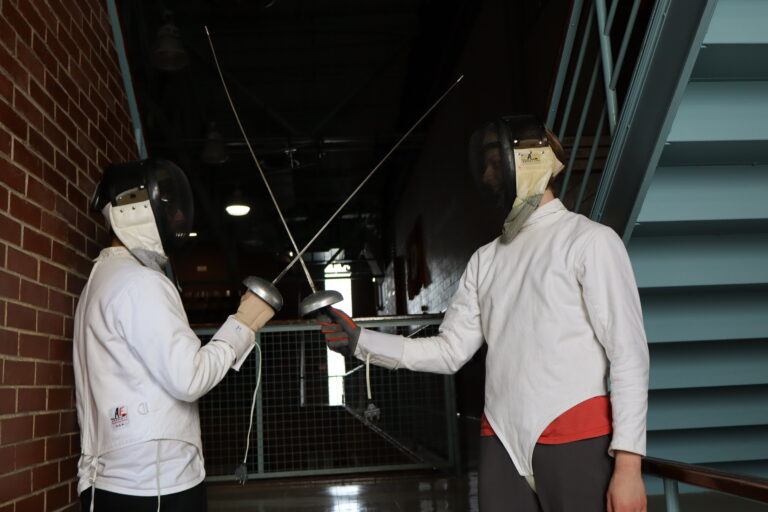
Discourse online amongst The Odyssey viewers has largely revolved around believed errors that the extensive use of IMAX cameras cause. In the scene pictured above, fans continue to discuss the trees in the background, and how they look uncanny and misplaced. In response, Nolan stated:
“Every shot on those [dialogue-heavy] scenes was an engineering question, because you can’t take a 400-pound camera and stick it above an actor. You have to build chain hoists, find a way to move the camera appropriately. Everything has to be done [correctly].”
Emily Wilson, a recent translator of Homer’s The Odyssey, similarly admits that at times Nolan’s The Odyssey’s dialogue is sloppy and incoherent. She states that his adaptation is completely inaccurate to the source material and leaves out major sections. Atop of adaptation issues, the actors could not hear themselves when delivering their lines, forcing abrupt cuts during tense scenes. IMAX cameras are extremely loud at all times, so editors often had to splice clips together in an attempt to make the scenes uniform. They also lack the typical amount of film a camera can hold. A fully-loaded IMAX camera holds 1,000 feet of film, which at the typical 24 frames per second provides only 2.5 to 3 minutes of continuous recording time.
Many film lovers were appreciative of Nolan’s use of practical effects throughout most of the film. Some fans feared that Nolan may break immersion by using AI to cut corners such as other recent films. For example, Eli Roth’s controversial Ice Cream Man (August 2026) has seen horrific box office numbers, making merely $2 million domestically. Roth’s film scored a 28% on Rotten Tomatoes, making it his lowest rated wide-release debut, and fans heavily criticized the film for incorporating AI-generated material. Though with standout scenes including the pyrotechnics during the invasion of Troy, and Circe’s transformations using moldable pig models, Christopher Nolan largely landed the practical effects outside of the IMAX-related sacrifices.
If you have any interest in directing and you feel there’s no place for you, check out UNB’s Media Arts and Cultures Society on Instagram and get involved!