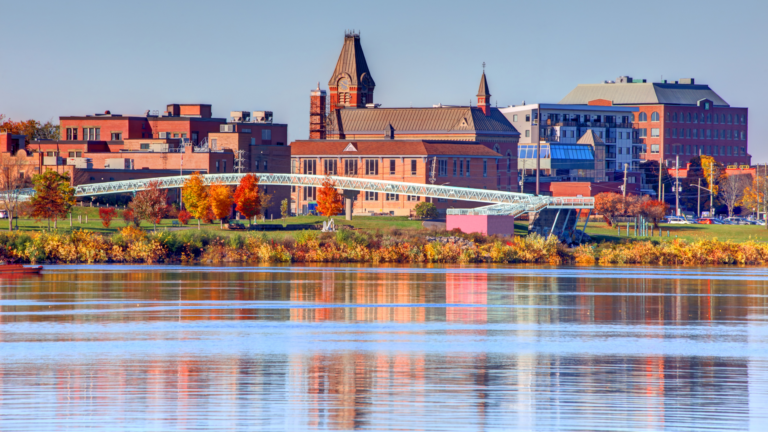




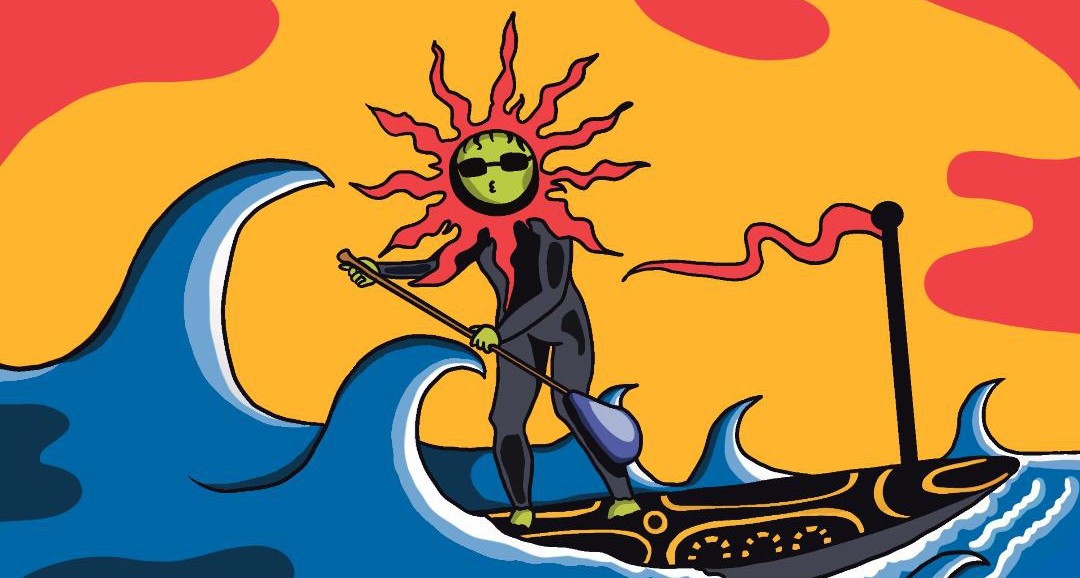
Cover Photo Credit: “Sundown Over New Funswick” by Kate Halliday, provided by Jason McIntyre.
Jeff Giesea, a communications specialist, entrepreneur, and writer defines “Memetic Warfare” as “competition over narrative, ideas, and social control in a social-media battlefield.” He further notes, “One might think of it as a subset of ‘information operations’ tailored to social media.” In short, the term describes propaganda in the form of internet memes.
NATO and other intelligence bureaus take memetic warfare quite seriously. By studying it as a concept of information warfare at NATO’s Strategic Communications Centre of Excellence, they illustrate just how much corporations understand the influence of memes. There have been many trends which internet users speculate to be government-manufactured propaganda, like posting glorifying “edits” of different branches of the United States military from mid-2024 onwards.
Memes have become an outlet to cope with the sense of doom members of Gen Z share about the future. They feel overwhelmed by the constant unrelenting global crises, and making and sharing posts laughing at it seems to be the coping mechanism of choice.
Jason McIntyre, the face behind the New Funswick meme account, pitched in his opinion on memes as a social coping mechanism:
“I think memes are a bite-sized way of processing issues that feel larger than life. Humour has a way of shrinking fear down and making it manageable, and seeing your perspective or emotions presented through somebody else’s memes can help you feel seen or a little less out of your mind.”
While this may be a healthy coping mechanism for some, memes are often taken too far. When memes begin desensitizing people, they may do more harm than good—especially when horrific events become memes in their entirety.
A prominent example of such an event is when the U.S. government began releasing the Epstein Files. While many took the release seriously and protested the files’ rampant censorship, others began making insensitive comments under videos of people protesting, like “just say you weren’t invited to the island.” Comments like these normalize these horrific crimes instead of recognizing them as the inhumane acts that the elite condone behind closed doors.
When people with political power recognize this trending desensitization, they emulate it by producing their own forms of desensitization and polarization to sway the masses. Recently, The White House on X (formerly Twitter), posted “When ICE books you a one-way Jet2 holiday to deportation. Nothing beats it!”, playing on a mass trend from 2025 with the audio “nothing beats a Jet2 holiday.”
“I like risky grassroots expressions, not data driven, corporate manufactured slop that are perfectly designed and tested to make you angry or join the military or put some extra dollars in the pockets of shareholders or whatever,” said McIntyre.
McIntyre added:
“Every time you share an appalling tweet that Trump has made, you’re playing into the outrage culture he and his goons perpetuate themselves off of … Anger is a currency and nothing makes them happier than getting a rise out of people.
“They don’t mind contradicting themselves … Their memes are appalling by design because they’re all dying for attention, and outraging people is so much more important to them than building a better tomorrow.”
The solution to memetic warfare and desensitization is not simple. In this digital economy, attention is currency and it’s becoming more difficult to disengage from social media. Though it may not feel like it, we have the agency to choose a life online or not.
As McIntyre said, your attention does not need to be positive. Your outrage, polarization, and continual interaction is their goal. It’s time we recognize the harm in being passive consumers of their content and recognize who is really profiting off our emotions.