



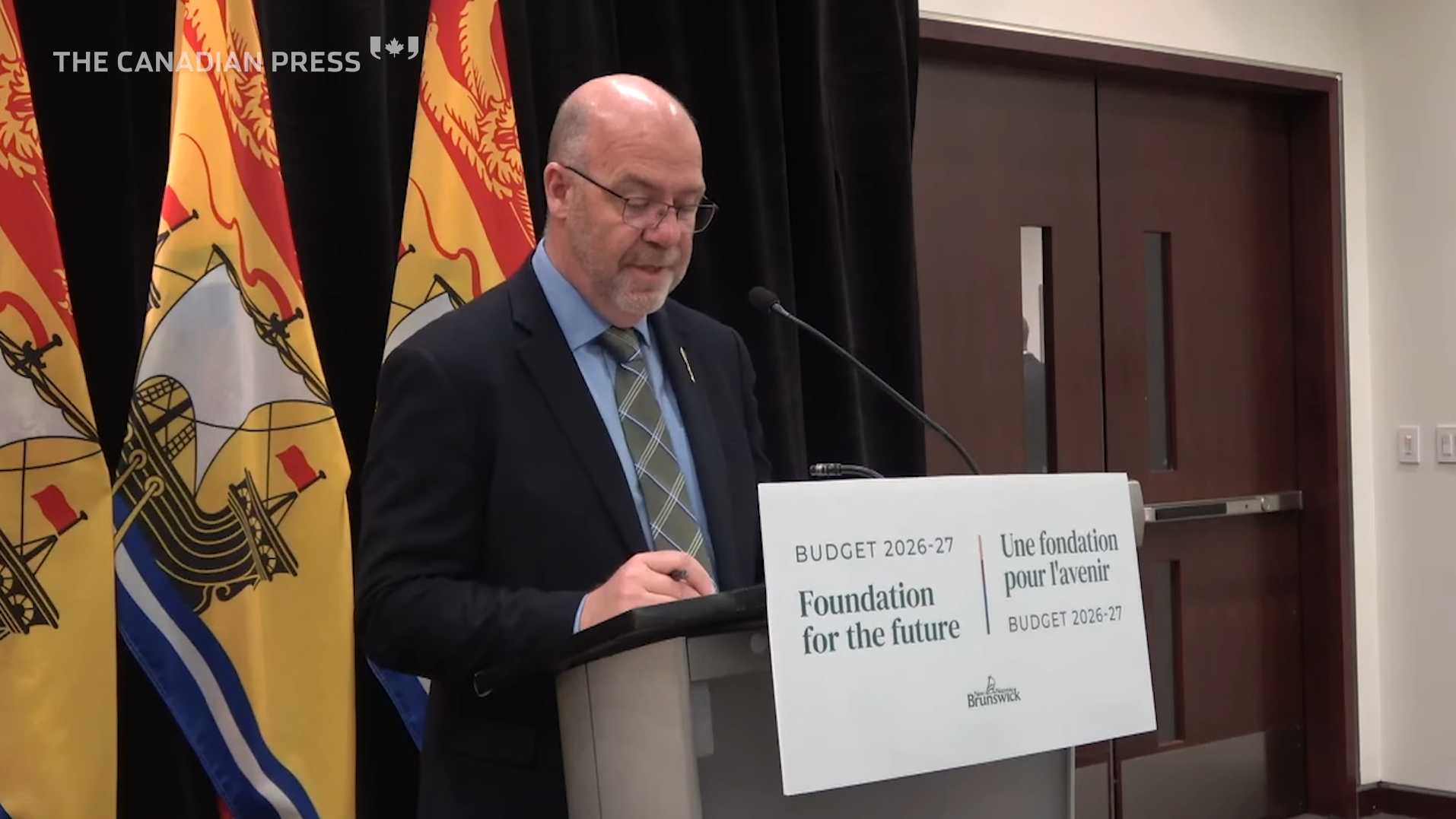
Cover Photo Credit: The Canadian Press, “N.B. Liberals table budget with historic $1.4B deficit, rise in health spending,” YouTube.
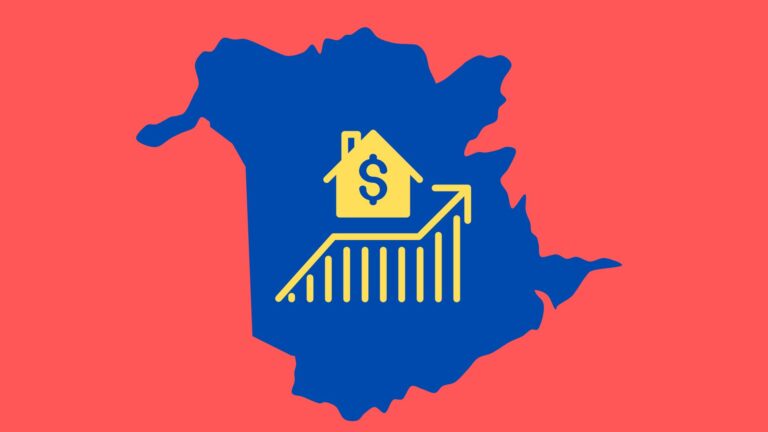
New Brunswick’s projected deficit has surpassed $1.3 billion prior to the March 17 fiscal update, increasing by almost $800 million from the projection made last March, which predicted a $549 million deficit. In the March 17 fiscal update, the Department of Finance and Treasury Board stated that revenues are projected to reach $14.24 billion, while spending is projected at $15.63 billion. This would result in an increase to a total of $1.39 billion in deficit.
The 2026 updates mark the province’s second consecutive year in deficit after a seven-year period of budget surpluses.
Adam John Peabody, executive director of Downtown Fredericton Inc. and Business Instructor at UNB, elaborated on how the short-term effects of the deficit might look in the day-to-day of your average Fredericton citizen:
“The current provincial government has stated publicly that they are spending as much as they are hoping to get some level of positive impact primarily to citizens around healthcare … You, at minimum, hope that the average health care is going to be able to see a tangible, positive impact in terms of access.
“Longer term impact is that the government has to find revenue or cuts to make up the shortfall between their revenue and spending. One way is by increasing taxes or fees or other sources of revenue for the government. Individual New Brunswickers are going to have less money in their pockets and more money going to the government. Or you will have significant cuts to the services that the government is investing in.”
The previous fiscal year, 2024–2025, ended with a $104.4 million deficit. That fiscal year began under the government of Blaine Higgs and concluded under Susan Holt, who governed the final five months after the October election.
Finance and Treasury Board Minister René Legacy shared this year’s information, welcoming input from the New Brunswick population through an online survey that closed on February 20th.
Among other factors, Legacy commented that the $407.3 million in over-budget expenses as well as the $372.1 million in revenue were lower than projected. He also attributed rising costs to the recent arrival of around 100,000 people into the province.
Health Department budgeting plays a major role in these numbers. Assistant Deputy Minister Nick McCann said the department was over budget by $432.5 million, with the physician contract alone accounting for $176 million.
Although expenses in this sector are high, Peabody reveals that increased spending does not automatically improve outcomes.
“The first year of [the Holt government’s] mandate also had record spending in healthcare. By the end of the first year, there were actually less individuals tied to family doctors than there was the year before. And so even though spending went up, outcomes were down.”
Peabody also explains how the deficit could indirectly affect the University of New Brunswick:
“They announced a freeze to the operating grants of the publicly funded universities. It sort of is an indirect cut, because we know through inflation costs typically grow year on year. So what that means is that universities will have to identify ways to make up that shortfall between inflationary rising costs and the same amount of operating grant that they’ve been relying on for the last year. There’s very limited ways that revenue streams can be found… there’s caps in terms of tuition. So I wouldn’t expect to see higher tuition come into place for a New Brunswick student, certainly. But you may see fees start to increase from universities to make up that shortfall. Alternatively, universities may have to identify areas for future savings, which means cuts.”
Peabody mentions this might also mean a harder time finding jobs for graduating students:
“There’s a trickle down effect that happens. Because the tax burden is so high to try and make up for that deficit, businesses have fewer funding to be able to rely on, which means that the private sector isn’t hiring, and that means less jobs available to recent graduates, or students throughout the summertime, etc.”
However, Legacy noted how New Brunswick is not the only province facing a large deficit. The combined provincial deficit across Canada totaled about $45 billion, which he said shows how it is a nationwide issue rather than one unique to New Brunswick.
He adds that the government is not considering higher taxes, and that the province is instead looking into cutting back costs. Holt supported this position, asking residents for help identifying areas where the government could reduce spending.