



Take a walk through the Student Union Building, or the library, at any time during the day, and you’ll find students at every table, buried in books or staring at a screen.
These students will then run in between classes, society meetings and shifts at a part-time job.
Ask a university student to show you their to-do list, and you will see pages of assignments, midterms, appointments, meetings, and, somewhere in the margins, a social life.
This August, the University of New Brunswick changed the definition of a full-time student from those taking 12 credit hours, or 4 courses, a semester, to those taking 9 credit hours, or 3 courses, a semester. However, a standard course load for a semester is 5 courses, and many students are taking 6 or even 7 in order to complete their degree.
In 2018, Statistics Canada identified youth aged 15 to 25 as making up 34 percent of the part-time workforce, with nearly three quarters, 73 percent, of that age demographic reporting working part-time because of schooling. “Going to school” was, in fact, the most commonly cited reason for part-time work.
The University of New Brunswick boasts “more than 120 ratified clubs, societies and groups” available to students, ranging from Student Union and campus media, to department societies and special interest groups, and it is imposed upon students from the moment they step on campus the importance of getting involved.
In a study conducted by Dr. Maurice M. Ohayon at Stanford University it was found that 62.4 percent of the students were involved in extracurricular activities, devoting an average of 16 hours a week to these activities.
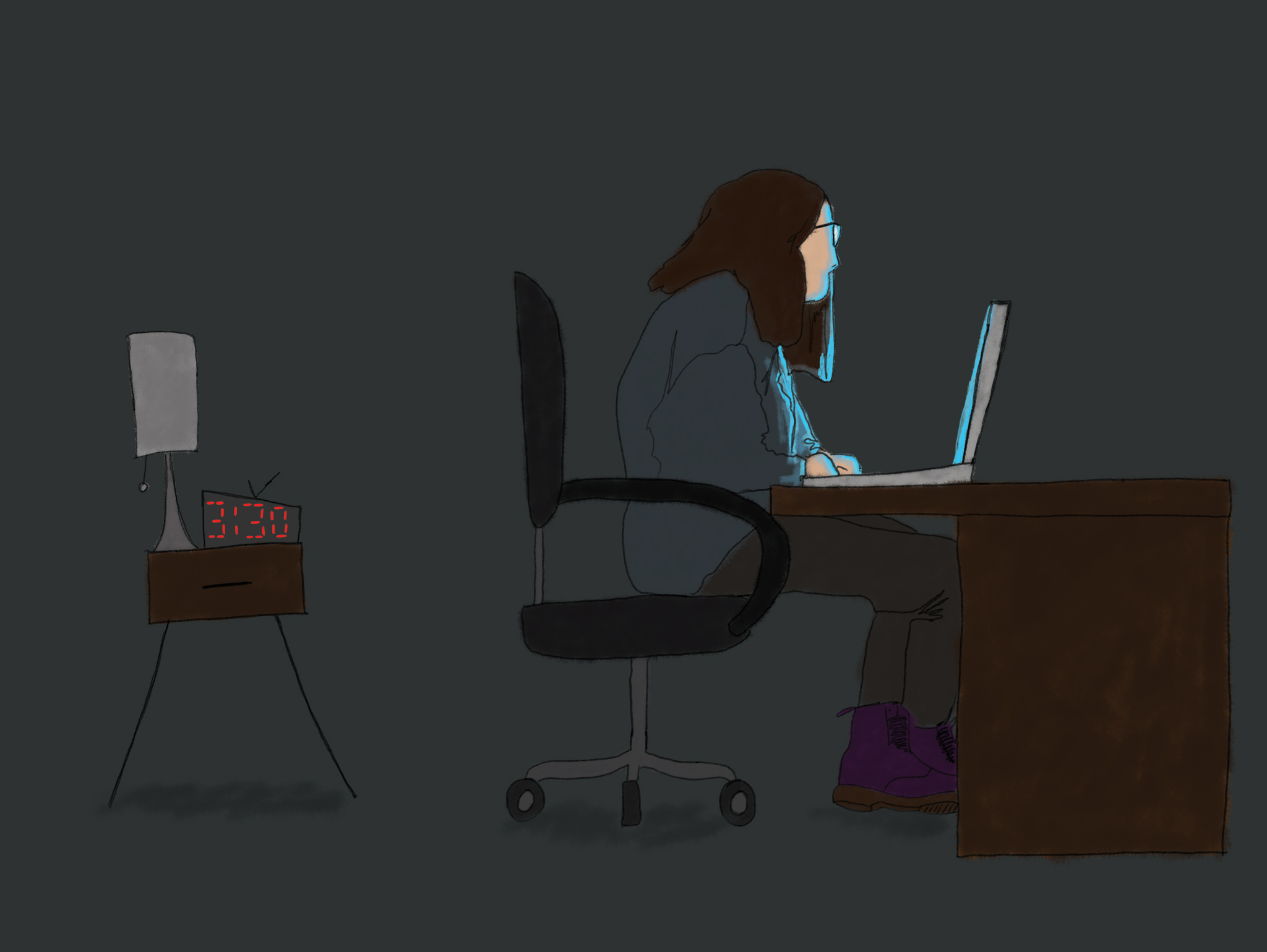
All of these factors contribute to a busy lifestyle that can have negative effects on the wellbeing of students, with many describing feelings of burnout, a lack of motivation and chronic tiredness.
Ohayon’s study also found that 27.2 percent of students report “moderate or severe daytime sleepiness,” and 17.9 percent of students report less than six hours of sleep a night. This was directly linked to participation in extracurricular activities, including part-time jobs.
This strenuous lifestyle can also be a factor in mental health issues, as students have minimal time to recover, develop healthy coping mechanisms and take care of themselves.
University counselling is seeing massive upsurges of students seeking therapy, with appointment rates at UNB Fredericton’s Counselling Services increasing by 40 percent in the last ten years. The severity of case for those accessing counselling has also increased in areas such as anxiety, depression, social anxiety and suicidality.
The demands placed on students are clearly leading to some forms of hardship, so why do we continue to fill our schedules in this manner?
As students, we are told that it is crucial that we build our resumes, take advantage of all the opportunities available to us, and make the most of our university experience. We are also informed by generations of past university students regaling stories of all-nighters, coffee and Red Bull, and hours spent in the library.
Because of all this, there is a certain guilt that comes with taking a night off, almost like a fear that we are not doing as much as we could be. Should be. We fall into a cycle of toxic productivity and procrastination, filling every minute of our day and only allowing ourselves a break when we are putting something off.
Personally, I think we need to ask ourselves what the benefit of all this might be. Are we really getting the most of our university experience if we are exhausted all the time, burnt out, and resentful of the things we are learning?