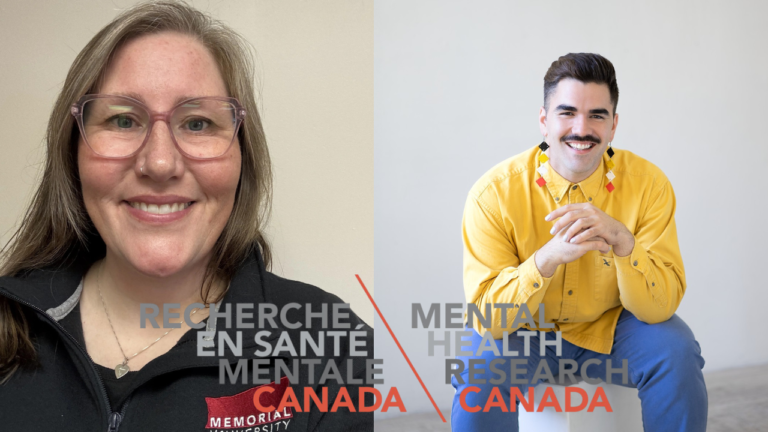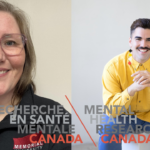




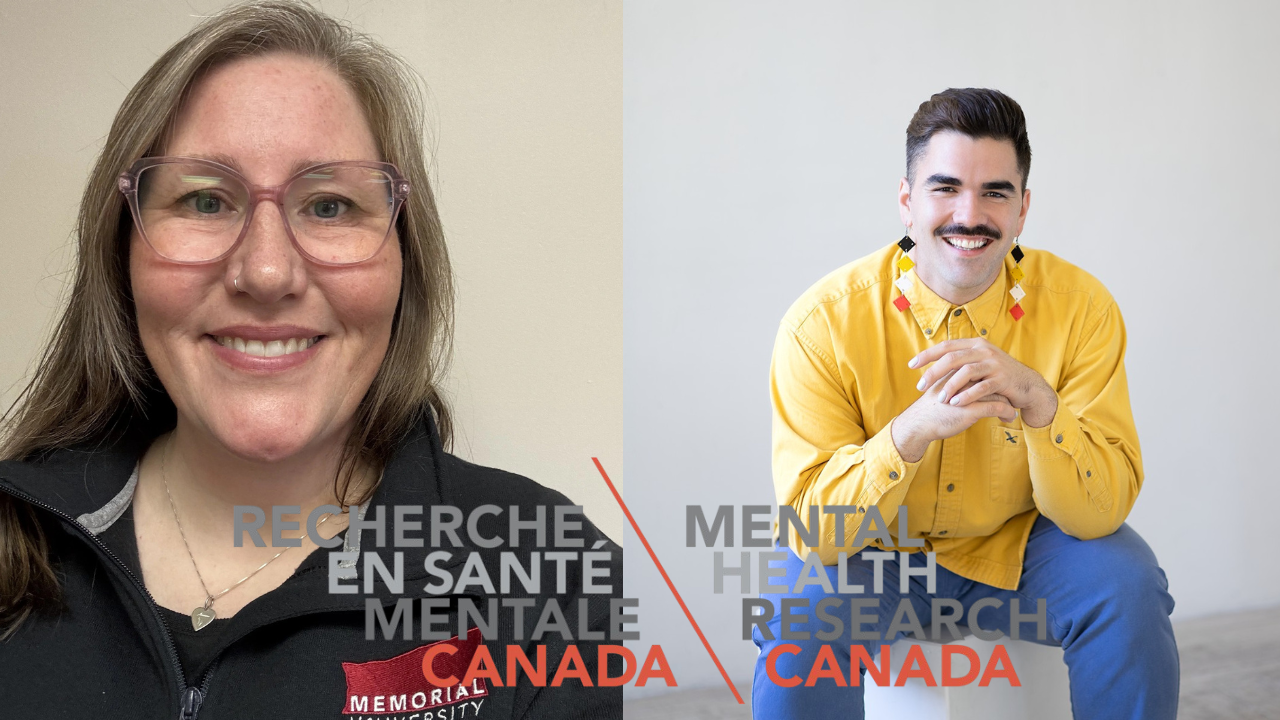
Cover Photo Credit: Jill Williams, Raymond Jordan Johnson-Brown, MHRC.
Since 2022, Mental Health Research Canada (MHRC) has released calls to early-career Indigenous researchers to submit their research proposals for funding. MHRC is a relatively new organization, having just moved from a smaller provincial-based organization to a national one in the 2019–2020 fiscal year. Their mandate has always been to provide funding to community-based research projects, but upon instating their national mandate, the organization realized their responsibility to fund Indigenous research specifically.
Barani Ganapathi, the Research Grants and Impact Senior Consultant at MHRC, explains this shift:
“We realized that it was our responsibility as a national organization to also focus on projects that are helpful to Indigenous communities, to support Indigenous students, and to do our small part in honouring Truth and Reconciliation. So, we started offering specific Indigenous calls in 2022. Since our inception, we’ve supported over 116 projects overall. Since we’ve launched our Indigenous calls, we’ve been able to support 26 Indigenous projects across all territories and 8 out of 10 provinces.”
I was privileged to get to speak to two of the Indigenous researchers that have received funding from MHRC, Jill Williams and Raymond Jordan Johnson-Brown, to delve into what their research entails and how their MHRC studentships have impacted their research.
Jill Williams
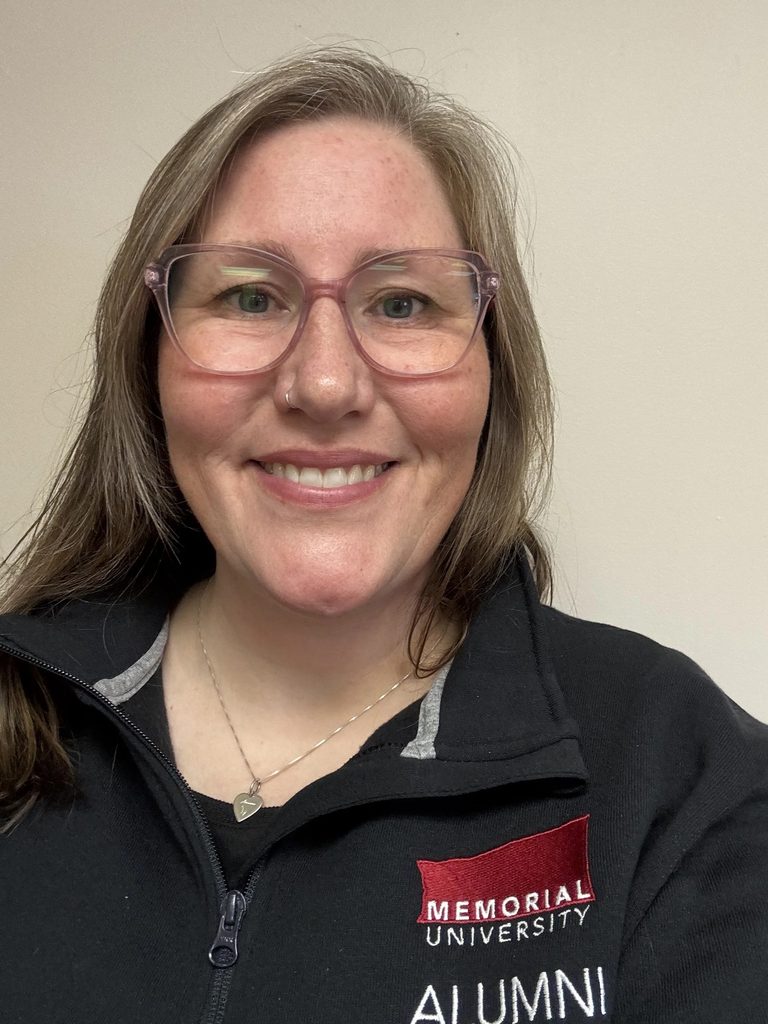
Jill Williams is the recipient of the 2026 MHRC-Mitacs-IWFC Indigenous Mental Health Studentship, sponsored by Mitacs and the Indigenous Women’s Fund of Canada. She is a PhD student in social work at Memorial University, and is carrying out her research in her community of Rigolet, Labrador, a small community that is part of Nunatsiavut. Jill’s research focuses on the positive impact of community sewing on mental health.
AP: Can you speak to the importance of land and place in your research?
JW: I have always worked in my northern communities, between the Nunatsiavut communities and the Innu Band communities. Those are the only two Indigenous groups in Labrador. I did it for 20 years. While doing child welfare was the majority of my work experience, what I realized is that we rely too often on professionals to deliver services in our communities. The research idea came to me in wondering: Could we do it better ourselves? Do we need to have people with degrees in our communities, especially considering the majority of the work is fly-in, fly-out? We have people who come from other provinces, other cultures, other ways of knowing, to come into our community and do such things as sitting across from somebody in a counselling setting. So, could we do this on our own?
Too often, we don’t look at the importance of connection, connection with one another. Anything. Like a gym group. A mom and tots group. You look at a bunch of men sitting on a dock, talking about who’s going fishing that day. That’s connection. We don’t honour that enough, and that is what I want to talk about. What I’m going to do is gather a bunch of elders from all of Nunatsiavut. I’m going to bring an elder from every community, and we’re going to sit and sew together. I’ll have prompts but I won’t have formal questions. I’m going to let the elders, the knowledge-holders, lead conversation. I’m hoping that at the end of the three days together we’re going to feel better. We’re going to feel proud of our work, we will produce mitts that they can do whatever they like with. We’re going to storytell.
One of the things we’re doing is a land-based day. I’m bringing all the elders to my cabin, which is about 10–15 minutes by speedboat, only accessible by speedboat. We don’t have internet. We don’t have cell phone service. And so what I want to imagine is landing on the island, landing at my cabin. The smell of salt air. The sound of the water. We sew with grass, that’s another thing that Rigolet does. Imagine the smell and the sound of sewing grass. I see a kettle, an old black kettle on my woodstove, the only source of heat. It’s a one-room wooden cabin that my father-in-law and my husband built. I see that cabin with quilts my grandmother made around the cabin and the smell of tea and bread. And we sit and sew, and let conversation happen.
That’s what I’m talking about: how we can better our mental health, our physical health, our entire health, by sitting together in the fresh air enjoying company with one another.
AP: What is it about sewing that draws you to the work?
JW: Sewing has always been something I’ve watched. I watched my grandparents, I watched my parents, I watched women, predominately, sew. I went to Nunavut a few years ago to teach a course and I watched them sew. And it’s something that I think connects Indigenous women—Inuit women specifically—because we’re in Northern Labrador, we’re in Northern Quebec, we’re in Nunavut. And our styles are very similar. And I think it’s something that connects us together. I use sewing mitts in my research because I wanted it to be something physical, tangible, that we produce at the end so we feel good about that.
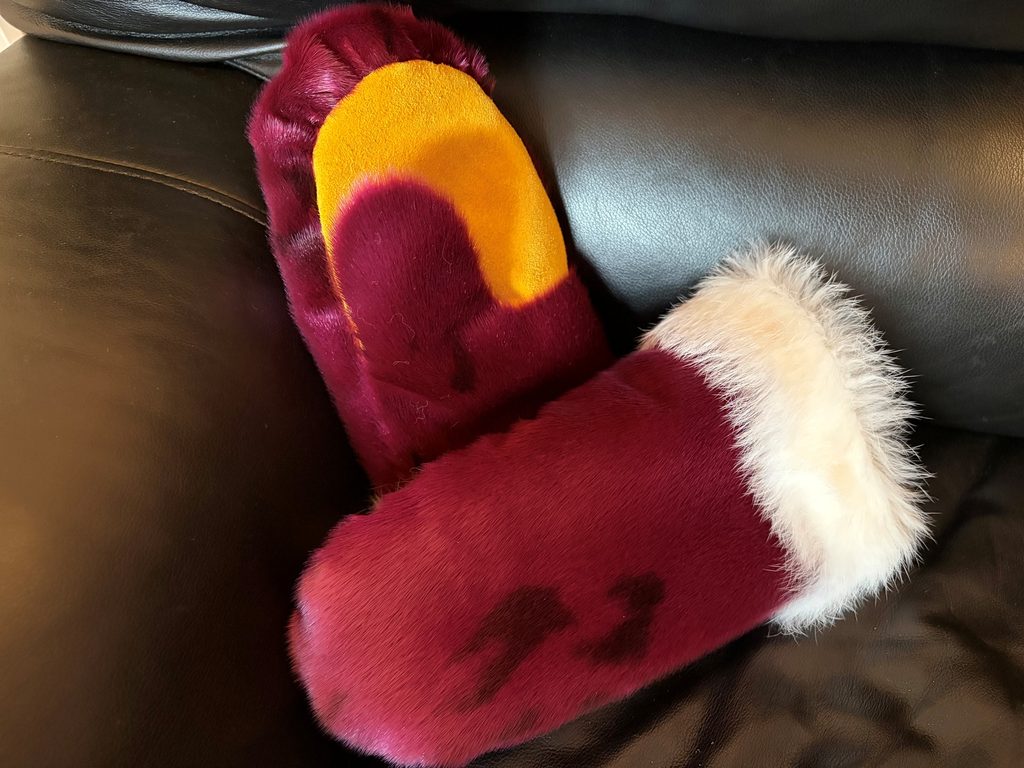
JW (cont’d): And sewing’s something that we do intergenerationally. My mother-in-law has taught me a lot. And I’m teaching my girls. It’s something so easy you can bring around with you. I bring it around a lot more now because I’m having such rich and valuable conversations with women everywhere. They’ll ask me, “What are you doing?” They’ll say, “I haven’t sewed in such a long time.” I’ll say, “Pick it up!” And they’ll say, “Yeah, I should!” I ran into a woman the other day who said, “I picked it up because I saw you sewing. I feel so good. It’s so good to be back at it!”
AP: How has the support from MHRC impacted your research?
JW: MHRC is the first big funder I’ve gotten for my research. Indigenous research, especially led by an Indigenous researcher, is difficult to imagine. For one, we don’t have a lot of role models. There’s more and more Indigenous people deciding to do research. I’m sure you as a student have heard a thousand times, “Well, unless it’s peer reviewed…” To be acknowledged by an organization as big as MHRC—it makes me feel that what I’m doing has value. And I know as an Indigenous person who is very connected to culture that to be recognized by a national organization makes me feel like they can see the credibility to it. It gives me more rigour. It shows that they also appreciate Indigenous methodology, and you don’t get that from every national organization. A lot of people claim reconciliation, but it’s so surface-based. MHRC has made it very real for me. I’ve applied for other funding since, and I feel like I have more “oomph” to it because I’ve been recognized by MHRC.
AP: I know relational accountability is important to your work. Can you speak more about that?
JW: Relational practice and accountability is a buzz word right now, and people are talking about it everywhere. I think to me, relational accountability in research means that you are not only connected to your participants, but you honour their time, you value their space. Too often Indigenous research is lead by non-Indigenous people and I don’t think that’s a bad thing in some ways. But I do think it’s important that people immerse themselves in culture before they decide to do research about people when they’re not a member of that community. I think it means being accountable to the elders, the knowledge-holders, and the people you’re going to be spending time with. It’s the key to my research and it’s part of the reason I chose to write my own methodology.
Too often people do research and then that’s the end of it. I’ll never not be a part of this research. I’m going to give it back to the communities in a very easy way. If you ever read my dissertation, you’re going to be able to read it, your grandma’s going to be able to read it, your 10-year-old is going to be able to read it. [I’m] acknowledging that it needs to be accessible as well. Those million-dollar words that some people use are just not accessible.
AP: Is there anything else you’d like to add about Indigenous mental health research?
JW: I’m being mentored by the first Nunatsiavut, Inuk, PhD graduate in social work. When I graduate I’ll be the second. To be believed in means more than anyone understands. And I’ll be forever grateful for that belief in me. I write this dissertation, then it’s peer reviewed and it’s credible. Then the next Inuk person who says, “Jeez, can I do a PhD?” The answer is heck yeah.
I struggled with knowing why I was doing this. Because like why are you doing a PhD? You live in Northern Labrador, you’re never leaving Northern Labrador to go work at a university, but man, the first dissertation I looked at was my supervisor’s because he was an Inuk PhD graduate, and I cannot wait for the next person to do it. I don’t want it to be remarkable that I’m number two. I want to see the numbers just rise. And with programs like MHRC that’s how we do it.
Raymond Jordan Johnson-Brown
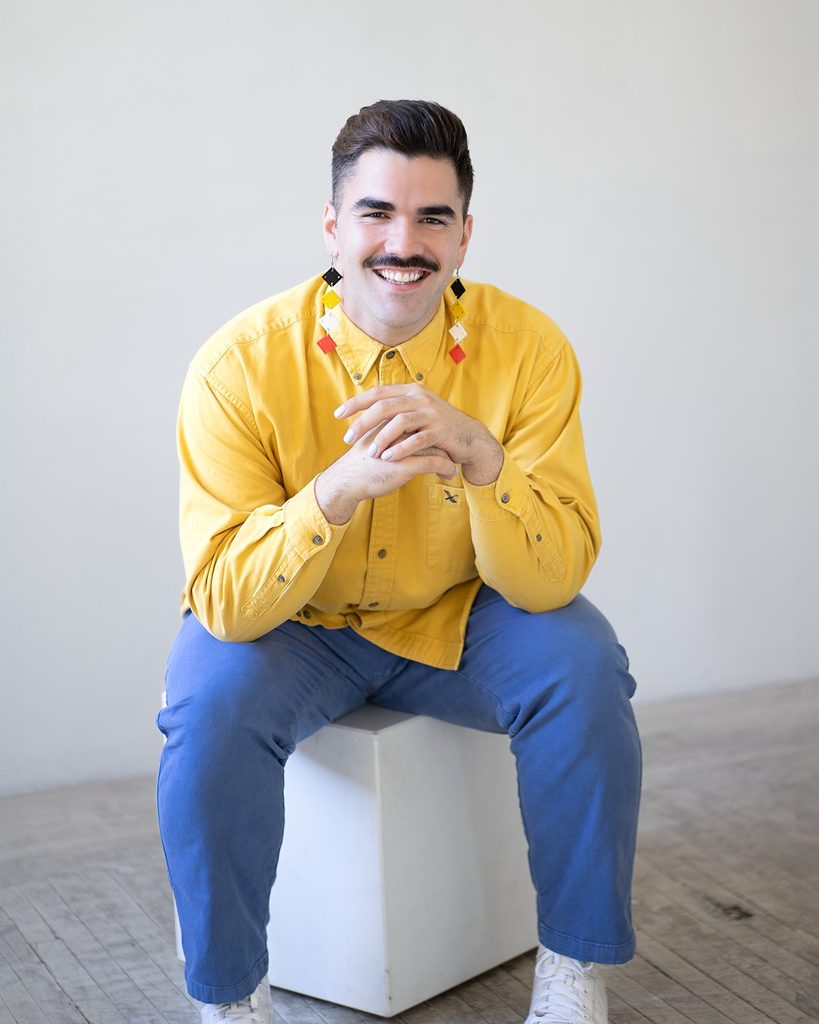
Raymond is the recipient of the 2026 MHRC-Mitacs-Empire Life Indigenous Studentship, sponsored by Mitacs and Empire Life. They are a Research Coordinator at McGill University, where they are working with Indigenous youth in care via a series of workshops, culminating in a mapping journal for the youth themselves and a zine for practitioners working with marginalised youth in care.
AP: Can you speak to the importance of carrying out your work on Indigenous youth in care in Montreal?
RJJB: When I was looking at some of the broader data around Indigenous youth in care, I noticed it flattens complexity. It is important to build something that is unique to Tiohtià:ke, the Mohawk word for Montreal. It is important to build something here that is informed by youth. There’s this amazing organization I partner with called Tasiutigiit. Being with them, they have really strong relationships and are really integrated in Indigenous care. We found mixedness, folks who are Inuit, folks who are Métis, folks who are First Nations. It’s been interesting to see the complexities that came up.
AP: In your research, the youth you work with are co-creators. Can you speak to any ways that they surprised you throughout the workshops?
RJJB: Everything I wasn’t expecting. I’m a professional dancer, professional actor. I expected to be doing drama workshops; improv; I thought we’d do movement and somatics. Writing. We never did any of those things.
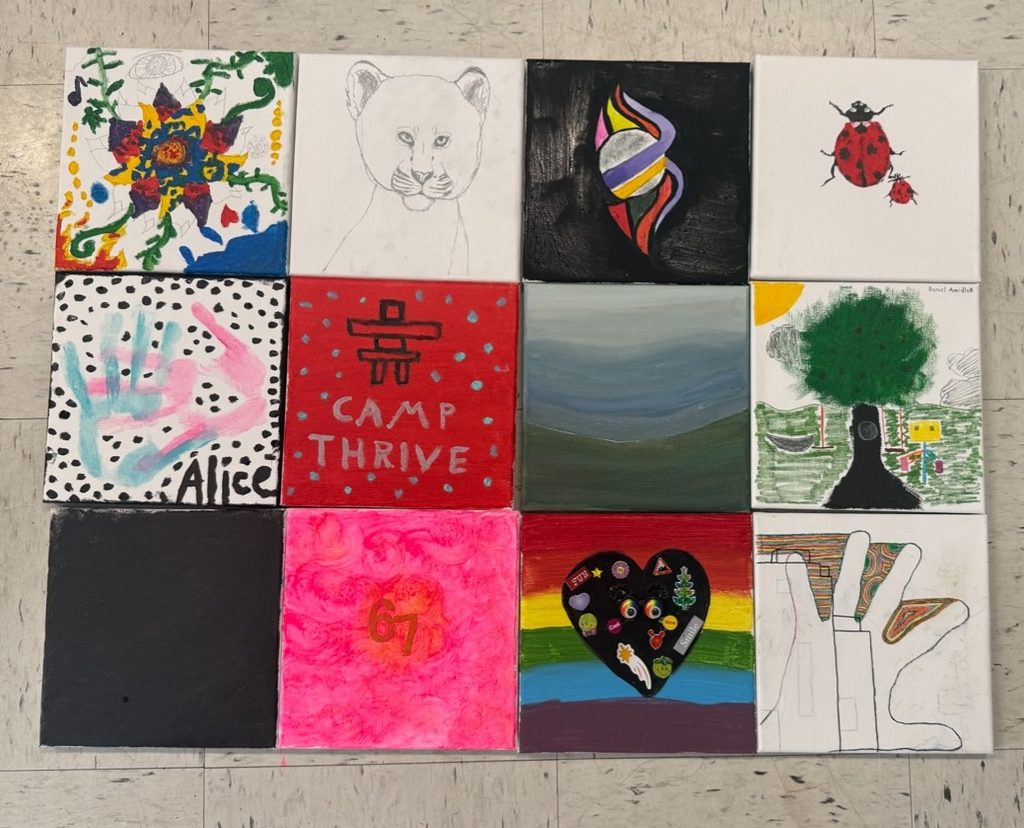
What was important for me was to present a question, and present as many supplies as possible. We had magazines, glue, Play Doh, clay, just a wealth of things. And then each youth was given a journal. The initial prompt was: Design a cover that reflects who you are. And seeing the different ways… the simplicity surprised me. Some youth just painted their entire cover blue. And then when we talked about what blue means to them it was calming for them and it reminded them of home. For me I was just like that’s all you wanna do?
The excitement around, “Oh, this is ours”—that was a really important take away for me. If you grow up in care, you end up losing so much stuff. My partner is from Quebec City and he has Garfield collections, coin collections … so much stuff. But I don’t really have these same memories in the same ways from those early years. I don’t have that archive of myself. So for the young people to be able to build something and to keep something and it be theirs, I think was really something so simple but surprised me quite a bit.
AP: How does it affect the work for participants to be co-creators?
RJJB: It’s uncomfortable in the best way. You’re taught to lead a space through a hierarchical approach, having decision making power. To go into something each week and say here’s the skeleton and let’s see what happens, it’s uncomfortable, but that’s exciting. To enter the space and say this is really not mine, this is yours and how do you want to present it? That really disrupts traditional academic approaches, and it disrupts the individualistic approach that we see in our economic system that then is supported by our education system, our justice system, all of these systems that still center around this individualistic thought. What we really did here is empower young people and build a collective future.
AP: Can you describe the two physical texts that will be a product of your research workshops?
RJJB: An Indigenous designer from Montreal is going to come and design the two pieces that will go back to the youth. One is a practitioner’s zine, so this is for professionals who work with Indigenous youth in care, but it might also be extended to be effective for other marginalized groups and identities. Quick facts, things we learned in the research that will help empower young people as they navigate care systems.
And then the workbook is for youth. One of the things I found in Batshaw which is the English equivalent of Child Protection in Montreal is that there’s a lot of outdated activities and materials. Youth have to spend time in their room. Maybe I can’t change that they have to go spend time in their room because some psychologist or medical professional above me made this decision, but what is the activity that they engage in in their room?
So we wanted to make a youth workbook by youth for youth that is really a mapping project to help you explore your map. Joy Harjo said sometimes you have to make your own map. So that’s really the premise of it is making your own map and going through different questions and open pages so that youth can have their own workbook and journal, something tangible to keep with them.
AP: Is there anything you’d like to say to prospective Indigenous researchers thinking of applying to the MHRC studentships?
RJJB: Shoot your shot. I never saw myself as a researcher. I think sometimes applying for opportunities like this feel out of reach for a multitude of reasons. Through the program I was supported through each stage to get to this place so that I could see the value I have to research and how this could really positively impact not just Indigenous youth in Montreal who are in the care system, but also much broader.
MHRC Indigenous Research Studentship Applications are open now!
Studentships are similar to scholarships, only with less importance placed on GPA. A studentship is more concerned with how beneficial a project will be for the community. Director of National Communications at MHRC Andrew Ross emphasizes that MHRC encourages applicants out of the maritimes and UNB specifically.
Barani agrees:
“We formally welcome maritime applicants. We welcome all First Nations, Inuit, and Métis students to apply. The call is open right now and will be closing on October 28th at 11:59pm Eastern Time. It is a fully funded opportunity worth $15,000.”