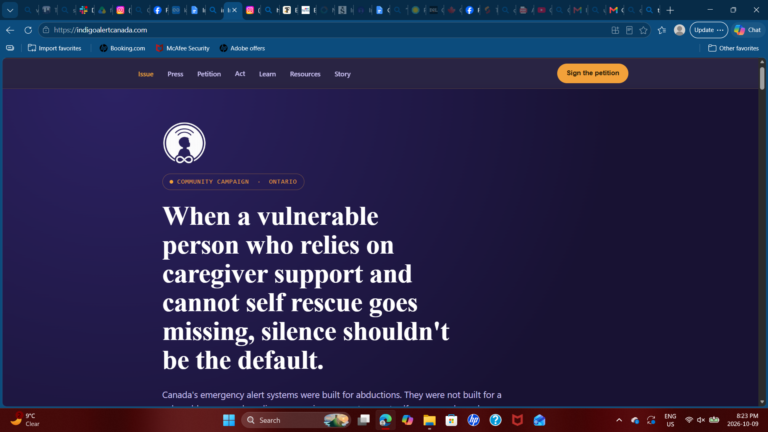




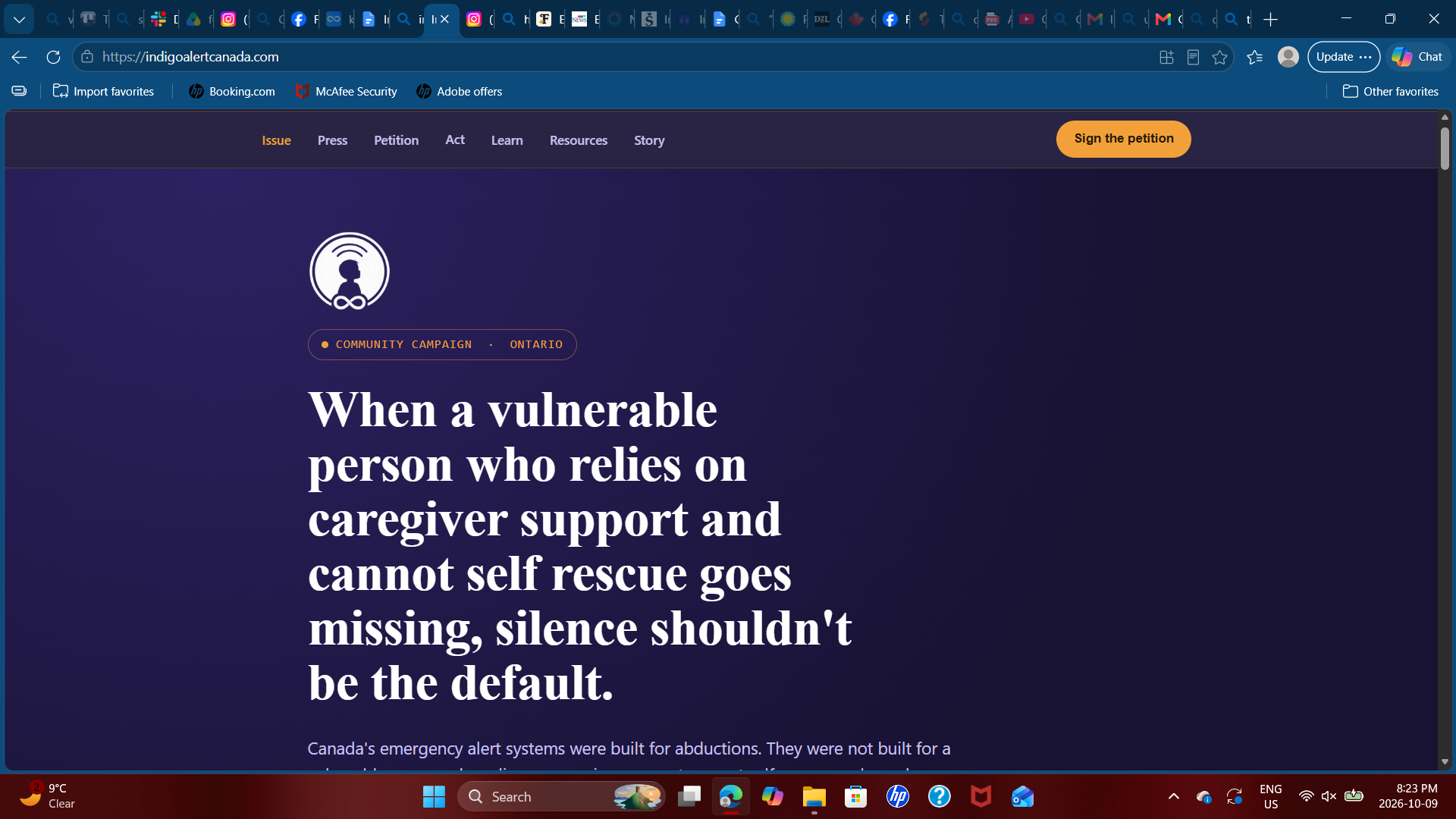
Cover Photo Credit: Screenshot from Indigo Alert Canada website.
The National Public Alerting System is an amazing tool for spreading awareness when an individual is missing. However, while the system intends to raise awareness for people who’ve been abducted, it does not address how to properly help individuals who lack the capacity to communicate their circumstances. The Indigo Alert aims to address these issues, and make the public more aware of the circumstances revolving around a missing person.
Currently, the National Public Alerting System announces when an individual is missing, physical characteristics, and any potential suspects. What they don’t express is the intellectual and developmental disabilities of the individual, and their capacity to communicate. In circumstances as dire and delicate as these, knowing the proper precautions to take when approaching someone could be a matter of life or death.
Chrystal Venator, a strong advocate for the Indigo Alerts, pointed out what many might fail to consider: it’s not just disabled children at risk, but also adults.
Venator shared her own personal fears as a mother in regard to her 11 year old son, Stalen:
“He is autistic: non-speaking with medical complexities. He has little to no sense of danger and he elopes [flees]. This fight is deeply personal to me because I know first hand the fear and vulnerability that comes with having a loved one who may not be able to recognize danger, communicate their needs, or safely find their way home.”

She then communicated the importance of understanding the individual’s potential disabilities in the situation of a missing person’s case:
“When a vulnerable person goes missing, their disability can fundamentally change the nature of the emergency. A person who is autistic, non-speaking, has an intellectual or developmental disability, or has another disability may not be able to communicate where they are, understand the danger around them, respond when someone calls their name, or find their way home … Knowing that a missing person is autistic or has a particular disability can immediately change search priorities and help responders identify potential hazards.”
Venator also mentioned how many people with disabilities go missing simply because they wander off, and it’s not always an abduction. While Amber Alerts do address missing children as a whole, they were designed in case of suspicion of foul play. Recognizing that abduction is not always the case, especially for those who can’t just say “I’m lost,” can save a person’s life and protect them from other dangers such as drowning, hypothermia, falling, etc.
Venator noted that “the absence of an abduction does not mean the absence of danger,” and that the Indigo Alert “is about making sure there is an appropriate emergency response for circumstances that the Amber Alert was never designed to address.”
Finally, Venator highlighted the importance of education and understanding that “the person may not respond in the way people expect.” Venator conveys that as a society, people need to be able to know how to handle the situation accordingly, and how “we need systems that recognize those circumstances before families are forced to explain why their loved one is different from a traditional missing-persons case.”
Amber Alerts were an important first step in the development of ensuring public safety; Indigo Alerts are a future for the safety of disabled people who are lost, abducted, or suffer from other dangerous situations. It is equally important to acknowledge where it falters, in that it fails to provide key details in specific cases.
You can make this potentially life-saving system a reality by signing the petition for the Indigo Alert today. Be the change that saves lives!