



Cover Photo Credit: Violet S.Z. Maier
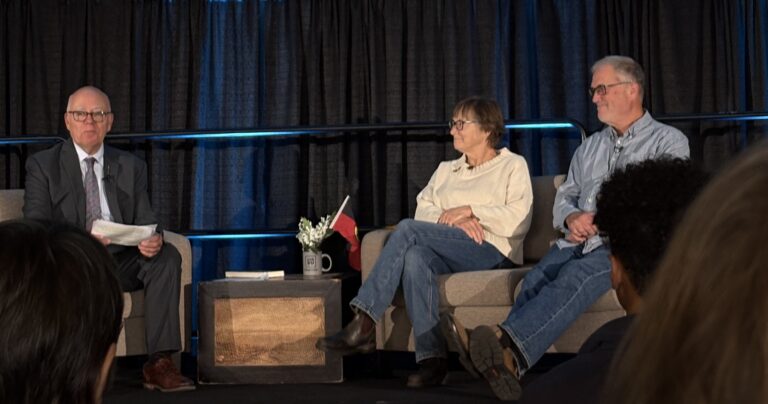
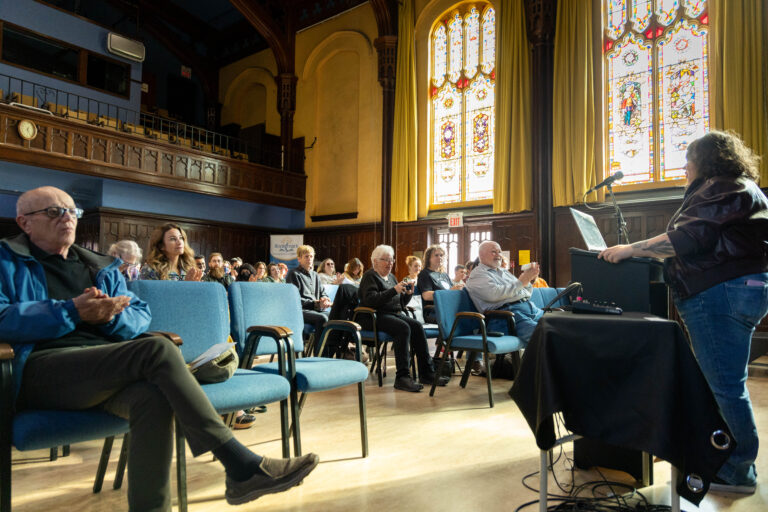
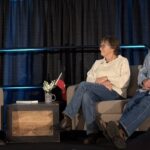
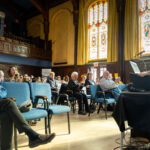
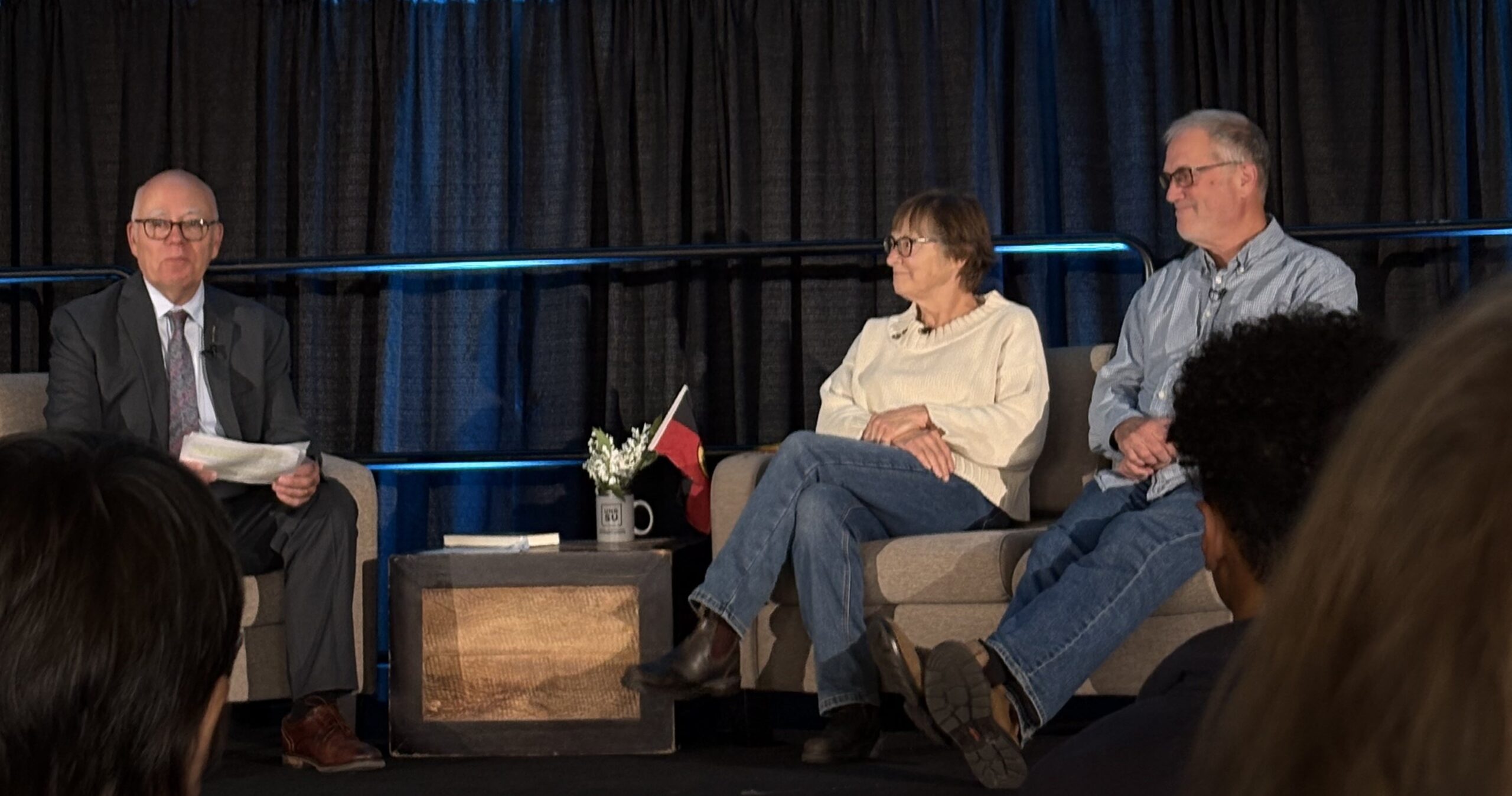
On October 5th, 2026, UNBSU and STUSU collaborated to host the first Late Noon with David Coon event that took place from 2:30–4 p.m. in the UNB Student Union Building’s Ballroom.
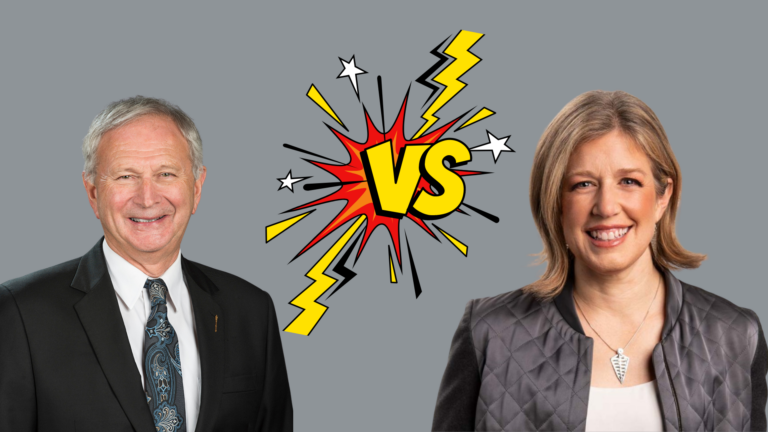
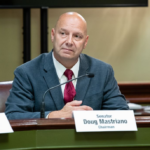
David Coon is a Member of the Legislative Assembly of New Brunswick, as well as the leader of the Green Party of New Brunswick. He shared the stage with Dr. Tom Beckley, a retired UNB Environmental Management professor, and Dr. Louise Comeau, who is Senior Advisor at Re.Climate, an institute at Carleton University. The event was interview-style with four separate sections: Introduction, “Myth vs Fact,” “Solutions, Change and What is Coming,” and an audience Q&A.
Amidst the “Myth vs Fact” section, one question posed was whether or not Canada’s heat is increasing.
Dr. Comeau stated:
“The amount of pollution from burning oil, coal, and gas going into the air every year, changes in the way we manage our force in our food systems; it is putting so many pollutants into the air that trap heat, so much that the global temperature of the planet is increasing. What happens when you’ve got heat energy in a system? We’re supercharging our weather, passing more extreme events as a result of that. We’re starting to accelerate the process. The ocean is warming very rapidly. Unfortunately in Canada, we’re seeing courageous government approaches both provincially and federally that will see Canada’s emissions skyrocketing over the next couple of decades. We’re in a bit of a pickle.”
MLA David Coon responded: “It’s disgusting. We’re in a disgusting kind of situation, I guess.”
Dr. Comeau commented:
“One of the things that I’m sure we all have noticed is we’re seeing hotter days, days over 30 degrees celsius.” She then asked: “How many of you are living in non air conditioned homes right now?”
When over half the audience raised their hands, she continued:
“Feeling heat often affects folks who live in housing that is less insulated, and doesn’t necessarily have a heatdome or an air conditioner. This really affects younger people, or people with chronic health conditions, and older people. So thinking about heat waves is something that when I first moved here, was certainly not in my mind. Other aspects include, of course, when you think about the fact that the planet is 70% water, when you’ve got more heat in the system, we’ve got more evaporation.”
During the “Solutions, Change and What is Coming” section, Dr. Beckley was asked by David Coon what positivity he’d like to bring to attention in lieu of previous topics covered.
“I mean, just the fact that young people are still willing and interested in bringing children into this world brings me joy. I don’t know if I would make that choice if I was 30 years younger. We had our issues back in the day too though. I thought the world was going to end over different matters, but that gives me hope on the social side. On the nature side, I love having the privilege of being able to spend a lot of time in nature, even though things are changing or they’re changing quickly in unpredictable ways. I just have the utmost confidence in the resilience of nature,” Dr. Beckley replied.
In the course of the Q&A section, I addressed all three speakers:
“I was wondering if you could speak on the proposed data centre in Lornenville and what the impacts of that could be for future generations, as well what university students could consider when approaching this matter.”
I furthered my question:
“There was another data centre approved in Saint John 10 hours ago; I was wondering if you could expand a little bit on that.”
Dr. Comeau responded:
“Number one concern is the demand for these data centres and the pressure that will put on the environment. That power has to be provided and they’ll all end up paying for it. The first thing I would say about data centres is that they would have to contract their own energy from renewables and storage, not from gas. The second thing is they have to be very water efficient. Then third, if we’re going to have them, you don’t want them close to residential areas because they’re noisy. I’m not an expert in exactly what we’re going to need, but I am an expert in the game that is being played, which is to process the amount of natural gas, which now has led to the discussion of removing the shale gas work scopes [the processes and scope of tasks involved in fracking gas from shale rock formations]. It’s been a plan, and I’m not a conspiracy kind of person; I’ve watched this out of this financing intention to market for gas—the demand for gas at the Lorneville projects—knowing we actually don’t have enough [for it], especially in winter.”
Another session of Late Noon with David Coon discussing AI will be occurring on STU’s campus next semester. Keep your eyes out for more information!