



I had to read “The Painted Door” by Sinclair Ross for my twelfth grade English class, and I can remember sitting a test, punching out an essay about Ann and why her life out in the prairies was so desolate and tragic. Preceding that is a clear memory of my teacher telling us that it was one of the most commonly used examples of Canadian literature – that it embodied that loneliness and isolation so typical of Canadian lit, especially Canadian lit that was based in Canada.
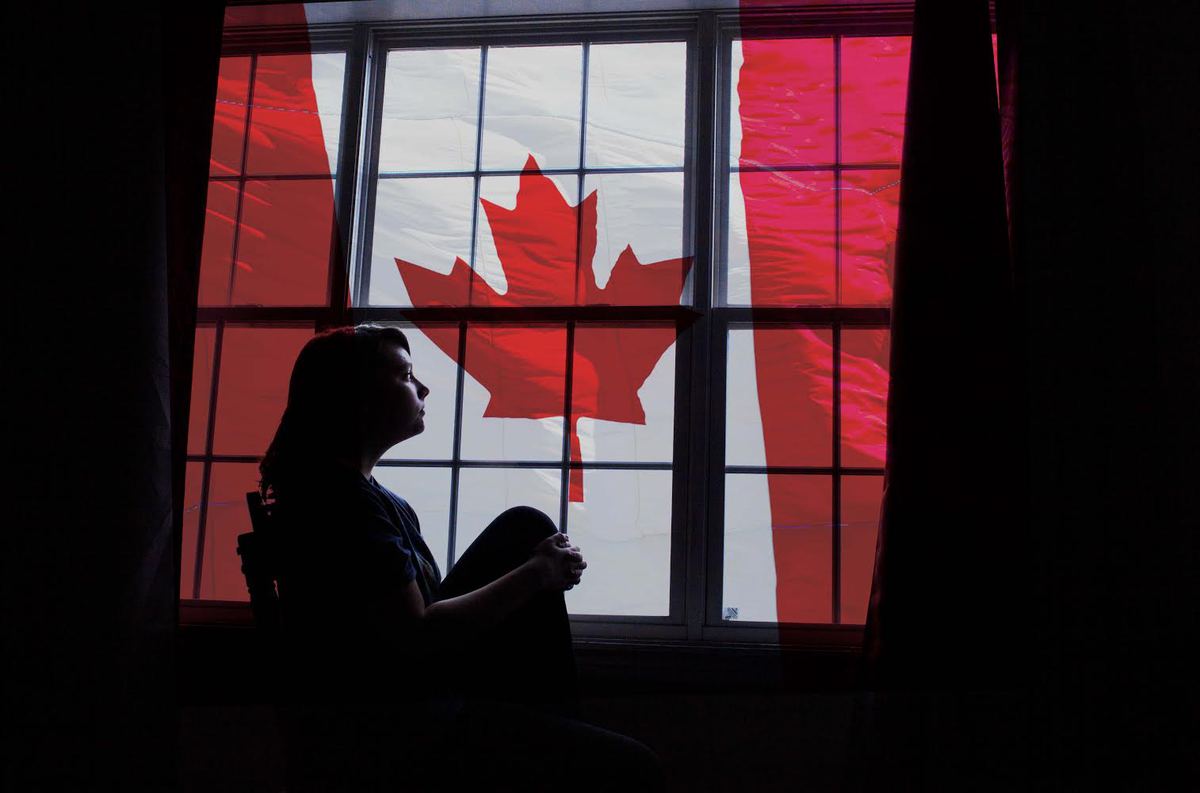
I hate “The Painted Door.” I maintain that it is one of the most irritating short stories I have ever had the displeasure of reading, and I read “The Lottery.” But beyond the fact that Ann deserves no sympathy for being an irritating and adulterous nightmare, the whole concept of desolation as a defining point of Canadian literature is so grating to me. Is that what it means to be Canadian? To exist in an isolated state, stuck in the farmhouse in winter?
I’ve lived in New Brunswick long enough to know that winter does cut my options. I have to sacrifice my long walks for fear of catching a chill – and I can imagine that in more rural areas it can be even more limiting when the winter gets deep – but at no point will I believe that it is the desolation of winter that makes Canadians, and I will sign up for a pyramid scheme before saying that “The Painted Door” or any of its ilk define Canadian literature, or the Canadian experience.
I won’t fall back on the classic argument of, “it’s the warmth of human connection and neighbourly affection in winter that defines Canadians,” because I’m not a pluralist. I have better things to do with my time than break into some semi-patriotic rambling about the good in people. I’m in no mood. However, I will defend the landscape. I will admit that one of the reasons I despise Ann from “The Painted Door” is because of the way she makes an enemy of the land and the farm, the way she makes an enemy of her husband (who really never did much to deserve freezing to death in the snow). The land is the most beautiful thing in this country. The red beaches in Prince Edward Island, the winding roads along the coast in Nova Scotia, the paintbrush trees in New Brunswick, the moors in Labrador, the cliffs of Newfoundland – are these not the best things we have to offer? Even sidestepping the mountains and lakes of the province I am from, the Maritimes offers so much more than a picture of a desolate, empty winter.
The mice under the snow! The squirrels under the bare oak trees! And to poke another stick at Sinclair Ross – the beauty, the undeniable and painful beauty of warmly-lit barn windows in the snow, the cows cuddled together and the wind running its course outside – in what way can you say that those things are dark or terrible, or anything but tender and romantic in the most desperate way?
I have never lived in the prairies – I will admit that at least. But I have lived in small towns, grown up on farms, in fields, and I know what the snow does when the winter is long. It is tiring. But it is beautiful. I hate that in the literary community, this example of the Canadian landscape is never made. Ann said the “landscape seemed a region strangely alien to life. Even the distant farmsteads she could see served only to intensify a sense of isolation. Scattered across the face of so vast and bleak a wilderness it was difficult to conceive them as a testimony of human hardihood and endurance. Rather they seemed futile, lost. Rather they seemed to cower before the implacability of snowswept earth and clear pale sun-chilled sky.”
How can something so wonderful be made to seem so miserable? I refuse. I will never allow “The Painted Door” to stand as an accurate painting of Canada, in any period, no – instead, let the landscape speak, go look at a Krieghoff painting, and stop sleeping with the neighbour.