



So, what is World Water Day?
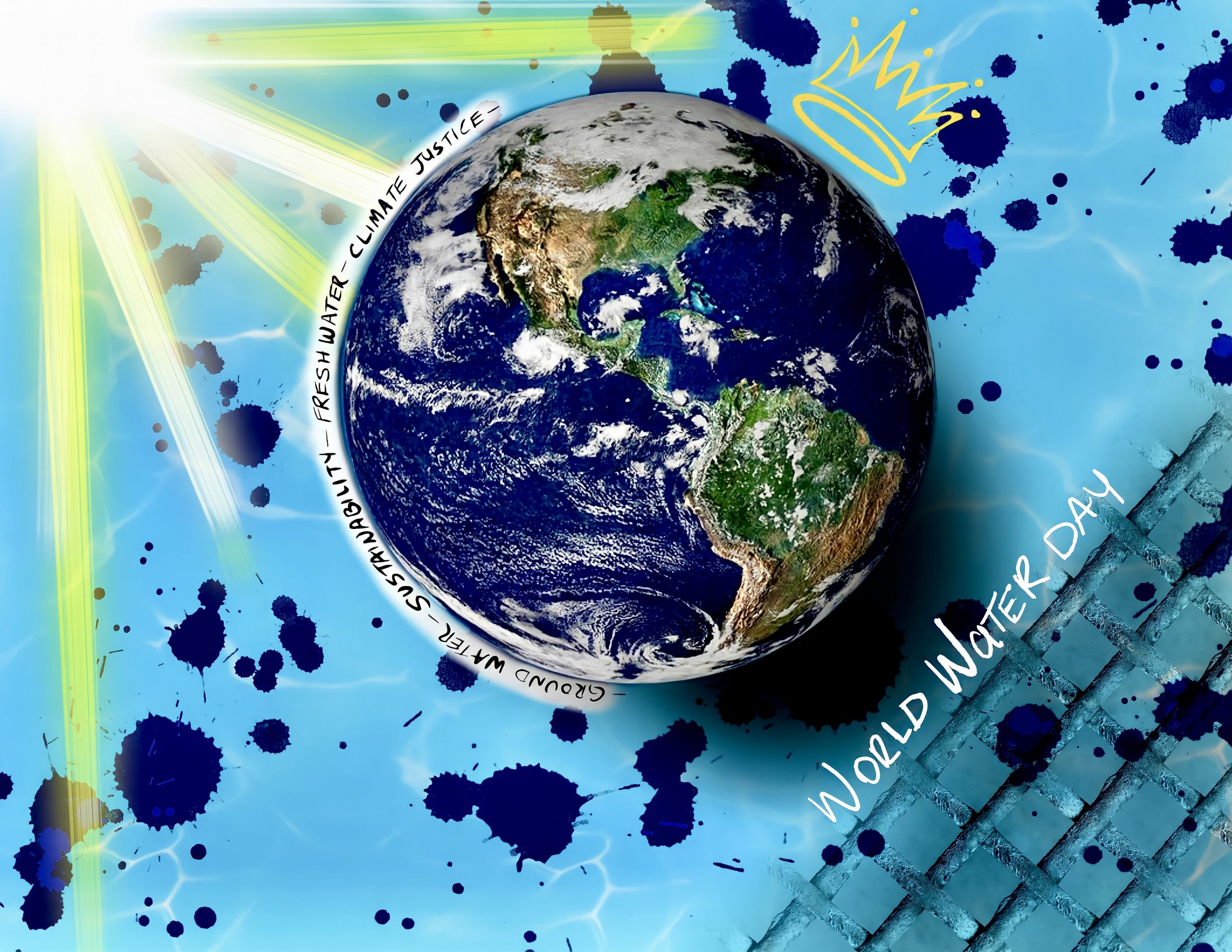
World Water Day is an annual United Nations Observance that began in 1993. It’s focused on reinforcing the importance of water. World Water Day is coordinated by UN Water and led by at least one UN Water Member and Partner who possesses a related mandate.
It is held on March 22 every year, rain or shine!
World Water Day celebrates our most valuable resource: water. Two billion people live without access to safe water. The date is about taking action to tackle the global water crisis. Fundamentally, World Water Day aims to support the future achievement of the Sustainable Development Goal 6: water and sanitation for all by 2030.
Every year, UN Water chooses a corresponding theme, followed by the release of the UN World Water Development Report. This year, the theme is groundwater, with the report containing recommendations on policy frameworks for decision makers.
You might be wondering, “what is groundwater?”
Groundwater is water found underground in aquifers. These are geological formations of rocks, sands, and gravels that hold large quantities of water. Groundwater feeds springs, rivers, lakes, and wetlands, and even reaches the world’s oceans. Groundwater is recharged for the most part by rain and snowfall that infiltrates the ground and can be extracted to the surface using pumps and wells.
Nearly all freshwater in the world is groundwater and without it, life would not be able to exist. Most of the arid areas on our planet depend entirely on groundwater. It also supplies a large portion of the water we use for drinking, sanitation, food production, and industrial processes.
Ecologically speaking, groundwater is critically important to the healthy functioning of ecosystems like our wetlands and rivers. Overexploitation of groundwater can lead to land instability, and in coastal regions, sea water pollution under the land.
Unfortunately, groundwater is being over-sourced in many areas. Too often, more water is extracted from aquifers than is replenished by rain and snow. Continuous over-use leads inevitably to the depletion of this invaluable resource.
Redress is often a long and difficult process, causing the cost of processing groundwater to increase and preventing its use. In a number of areas, we simply do not know how much water lies underground, making it difficult to harness resources that might otherwise benefit millions of people. Exploring, protecting, and sustainably using groundwater is central to surviving and adapting to the existential threat of climate change.
Agriculture is the largest consumer of the world’s freshwater resources, and makes up for more than one-quarter of the globe’s energy. At our current rate of consumption and rate of population growth – an estimated 9 billion people by 2050 – food production is expected to increase by at least sixty percent.
Last year, the UNB Art Centre launched an update of their free interactive app, H20 – An Ocean of Science, which was developed in collaboration with Spandrel Interactive, a New Brunswick-based game and digital media developer. The app allows anyone with a smartphone or tablet to explore climate-impacted water systems around the globe. It was launched in 2021 to celebrate UNB Art Centre’s 10 year anniversary of their participation in World Water Day.
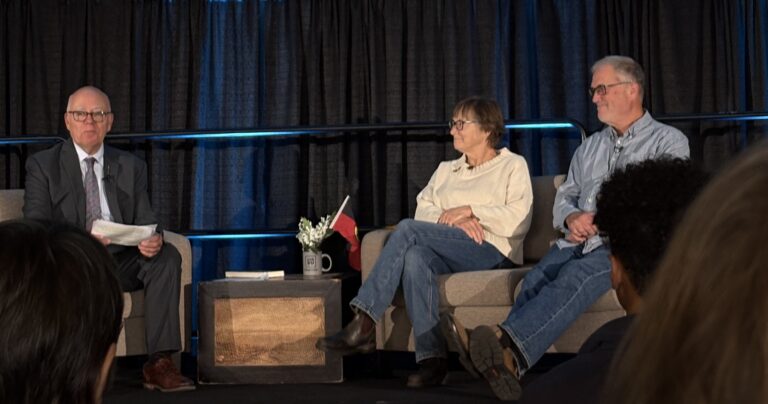
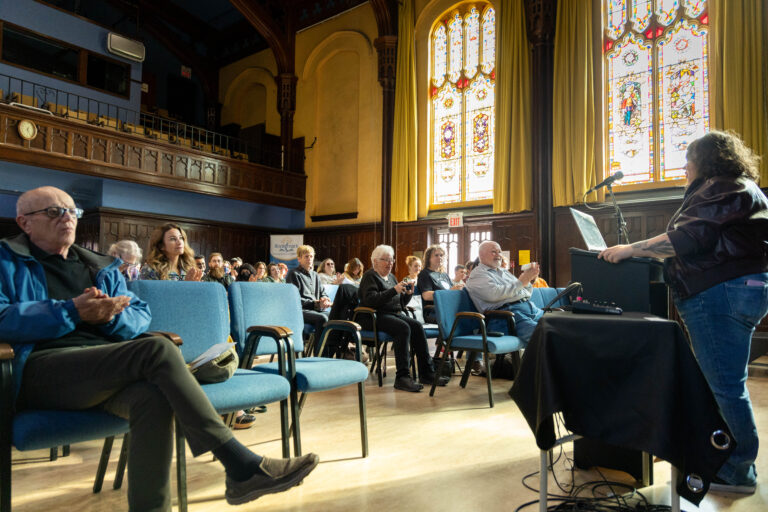
In partnership with UNB Sustainability, the Lorenzo Society and the Indigenous Advisor at UNB hosted a panel discussion. The purpose of the discussion was to address the question: “Is there something in New Brunswick’s water?”
Hosted by Dr. Rachel Bryant, literary historian, award-winning author, and a Research Associate at the Mi’kmaq-Wolastoqey Centre at UNB – through both an Indigenous and non-Indigenous lens – the event aimed to encourage water activism and conservation by highlighting problems in New Brunswick that require innovative solutions by global leaders. The discussion introduced key issues such as invasive species, effects of climate change, water quality, plastic/chemical pollution, and privatisation.
Opening remarks were made by Dr. Petra Hauf, the Vice President UNB Saint John. Panellists included Maude Barlow and Andrea Polchies. Barlow is a founding member and former chairperson of the Council of Canadians, and the co-founder of the Blue Planet Project. From 2008–2009, she served as Senior Advisor on Water to the 63rd President of the United Nations General Assembly and was a leader in the campaign to have water recognized as a human right by the UN.
Polchies is a bead worker and band councillor from the community of Wotstak. She has served her people and nation through her work as a land defender and her family has been continuously occupying the camp at Macehewik sipohsisol since 2017.
To learn more about water sustainability in New Brunswick, the discussion can be viewed on YouTube at https://youtu.be/Tfw33eztvnc.