




On one day a year, the multi-billion-dollar telecommunications company Bell Canada raises millions of dollars for mental health initiatives with Bell Let’s Talk Day, but students wish the company would walk the walk every day of the year.
“I guess it just makes me really question, ‘does Bell the company really care about mental health at all?’” said Cormac Stewart, co-president of the Mental Health Association at University of New Brunswick.
Only one day after this year’s annual January 29 event, two Ontario residents protested the company over their contract with the provincial government, which charges $1 per minute for local calls made out of Ontario detention centres.
While the protesters agree with the effort of the day in raising money and awareness, they suggested Bell should put some of their annual funds raised into mental health programming at detention centers.
CBC investigated the treatment of Bell employees in 2017 and received hundreds of emails detailing panic attacks in the workplace along with stress-induced vomiting and diarrhea from former Bell employees.
“It’s a bit of a struggle to see a company so big and so rich and so powerful preach mental health only on one day, but not support their employees and other people every other day of the year,” said Kate Metcalfe, the other half of the Mental Health Association co-presidency.
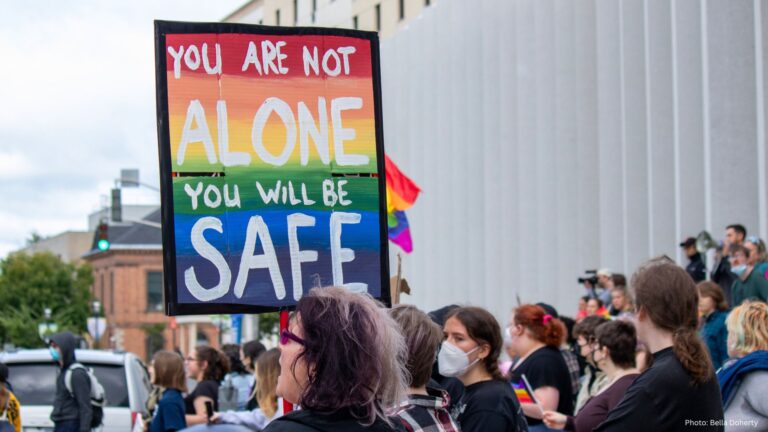
The Mental Health Association made the decision not to do anything special for Bell Let’s Talk Day this year and instead posted a photo on Instagram reading “let’s talk about mental health every day.” They aim to make people feel comfortable talking about their illness(es) beyond Jan. 29 and to encourage open conversation when it’s not convenient for the marketing and profits of a billion-dollar company.
“I don’t think Bell Let’s Talk Day has to be the be all, end all. But I think days that promote conversation about mental health are really, really important. And ideally every day would be like that” said Stewart.
Metcalfe is passionate about breaking down the stigma around mental health and opening the conversation up due to the negative mental health she experienced in high school.
Her fear to talk about her struggles as she was going through them meant she was unable to get the help she needed, and improve. She wants others to know it’s okay to talk about it.
“Ultimately, it just comes down to that you don’t have to struggle alone,” said Metcalfe. “There’s people there who want to support you, there’s people who love you, there’s people who care about you, and opening up is okay and it’s okay to not be okay.”