



“Abandon all hope, ye who begin to observe,” Galileo warns his pupils.
A Life of Galileo, written by Bertolt Brecht and directed by Robin Whittaker, tells the story of renowned astronomer Galileo Galilei during his struggle with the Catholic Church in Italy.
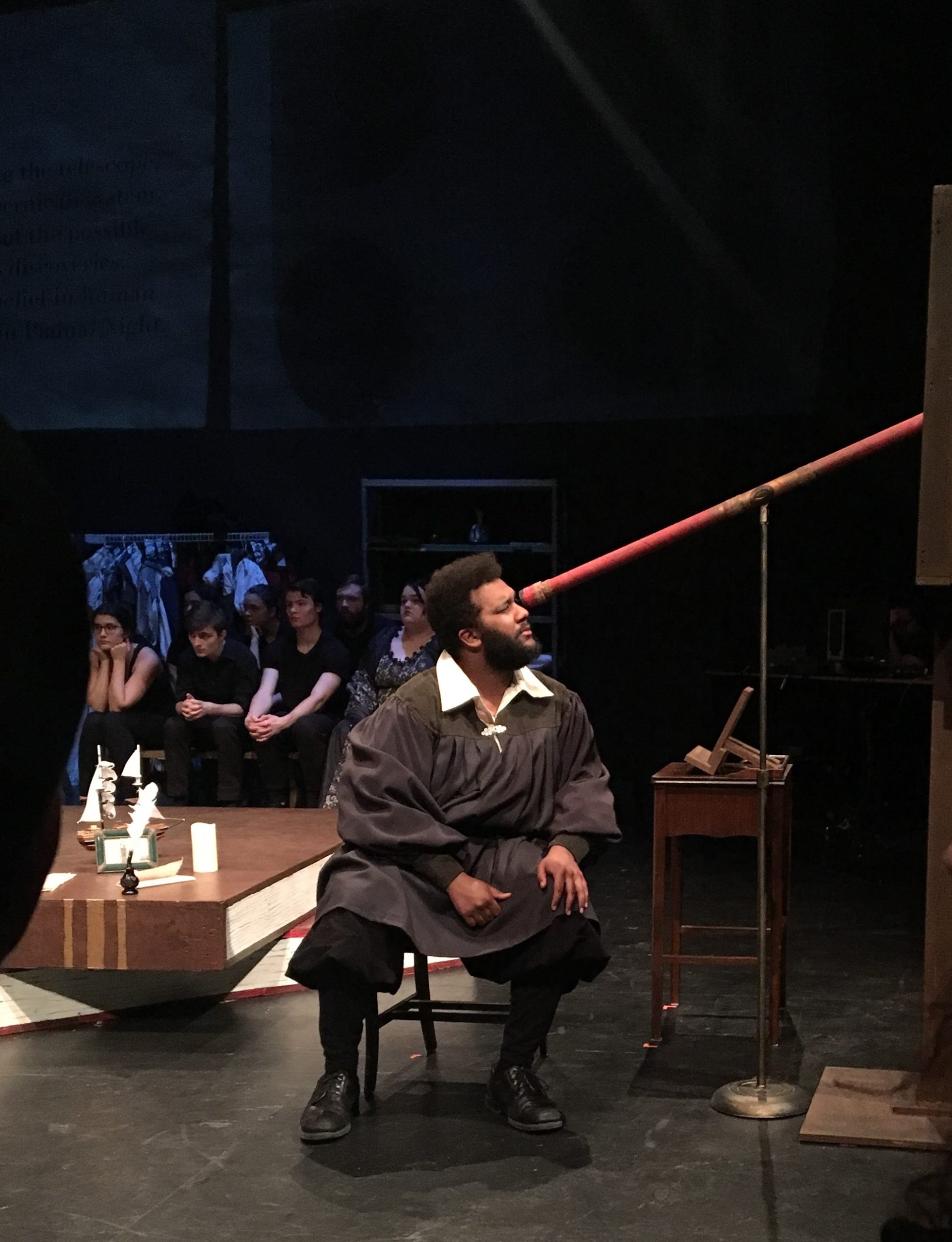
As soon as an audience member walks into the theatre, they are struck by the gorgeous set that transforms the space. Painted planets hanging from the ceiling, twinkling stars projected on the walls and giant books decorating the stage give the impression of walking into a fairy-tale.
As the audience found their seats, live house music composed and performed by Dylan Sealy created an atmosphere bubbling with energy.
The very first line of the play sweeps the viewer into the story of a man fighting for his beliefs, and for truth, against the powers of his time.
Specific moments of this show stood out in adding to the magic of the story, notably monologues delivered by Sage Chisholm as Andrea Sarti, Thomas Woolsey as Little Monk and Jason McIntyre as Sagredo.

St. Thomas first-year student, Nate Telman, gave an exceptional performance as Galileo, pouring life to this well-known historical figure.
Arguably the most comedic moment in the show arose during the intermission. An intense scene had just ended and the main cast had exited the stage. A few members of the audience began hesitantly clapping, but stopped as a narrator stepped forward seemingly to introduce the next scene. Anticipation rose, but the narrator broke the tension by simply saying, “It’s intermission.” Audience and cast alike broke into laughter.
The intermission consisted of music, dancing, and jokes from the cast. The market spectacle scene that followed broke from the serious tone of the play, building on the laughter of the intermission.
Director Robin Whittaker prefaced the show by describing the playwright’s ideal audience member as one that sits back and enjoys the show, and then leaves the theatre to enact social change. He argues that Galileo’s struggle mirrors many problems faced today.
“Brecht wrote simultaneously of struggles in the past and present,” Whittaker writes in his director’s note. “We find ourselves presenting a play about the lengths humanity will go to maintain or question authority. Theatre is relevant because it reflects the past so that we might learn and take action in the present.”