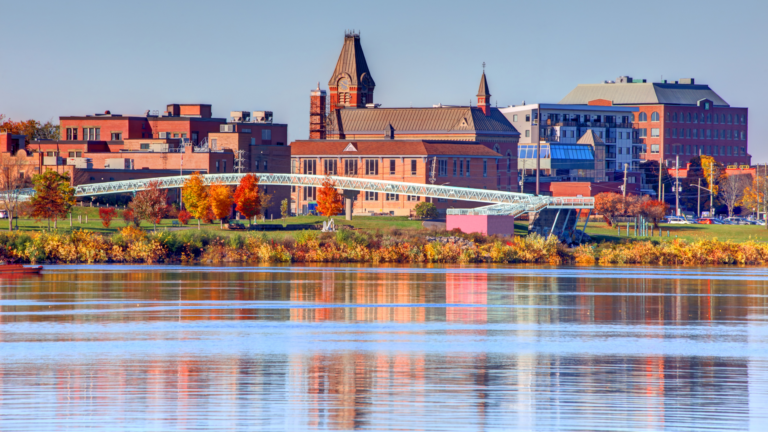





Cover Photo Credit: Rebecca Williams-Simms
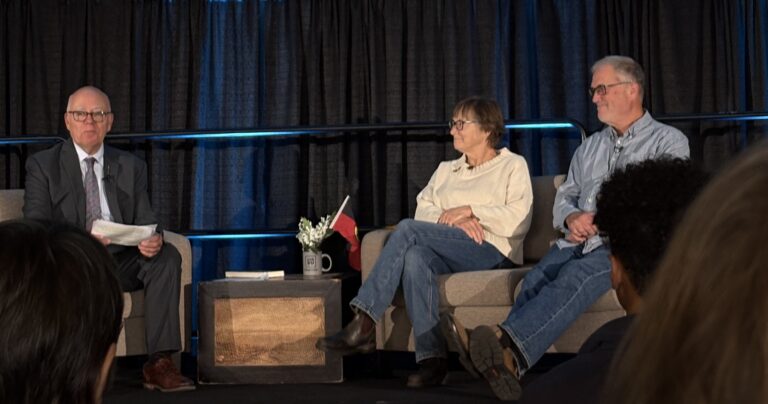
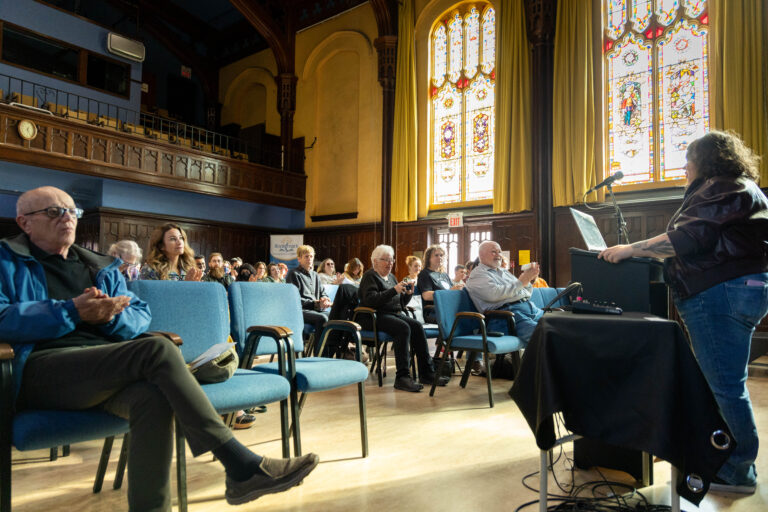
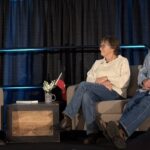
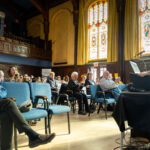
On Thursday November 20th, as part of the Fredericton Region Museum’s lecture series, Andy Flanagan delivered a talk on his book The Endless Battle: The Fall of Hong Kong and Canadian POWs in Imperial Japan. Published by Fredericton’s Goose Lane Editions, The Endless Battle is a historical account of World War II, based on a collection of diary entries, verbal stories, and memorabilia from Flanagan’s father, who was held captive for nearly four years in Japanese Prisoner of War camps.
Canadians arrived in Hong Kong on November 16th, 1941, joining a force of local soldiers and enlistments from Britain, India, and Singapore—all of whom participated in the war effort against Japan. Merely three weeks after the Canadian arrival, Japan attacked Hong Kong. Canadians fought for as long as possible against the far more experienced and well-equipped Japanese forces who ultimately forced them to surrender by Christmas Day.
Despite the tendency to associate Canadian participation in World War II with the battles in Northwestern Europe, Flanagan reminded the audience:
“The Battle of Hong Kong was the first battle fought by Canadian soldiers in World War II.”
Flanagan shared that he observes a woeful lack of education amongst his peers regarding the experience of Canadian soldiers in Imperial Japan:
“The first time I ever saw anything about the Battle of Hong Kong was in grade 11 social studies; there was one paragraph about it in my textbook … I remember being so proud … but it was only one paragraph.”
Flanagan attributes this lack of acknowledgement to the fact that the battle’s outcome was unfavorable for Canada, analogizing it to the United States’ relationship with Vietnam.
Japanese soldiers captured Flanagan’s father, James Andrew Flanagan, Rifleman RRC and transported him to Yokohama Camp D on a hellship. The term ‘hellship’ comes from the inhumane conditions that prisoners experienced aboard the vessels, as they were packed so tightly they struggled to breathe and were denied access to light, bathrooms, and sufficient food and water.
Upon his arrival at Yokohama POW Camp D, prisoners were forced to build and repair warships. Flanagan claimed that his father, along with other POWs, took every opportunity to sabotage the production of ships. The Japanese forces then relocated Flanagan’s father’s group to a Sindia Coal Mine Camp after a ship fell apart in Tokyo Bay.
Those in the camp were provided only three grams of rice per day, forced to perform crushing labor, and terrorized by notoriously cruel guards like Kamloop’s Kid and Suzuki, who were known for delivering vicious beatings to Canadian prisoners at any opportunity. Even still, Flanagan claims his father, along with many others, demonstrated immense resilience and spirit by documenting recipes they made, doing their best to remain shaven, and refusing to sing the Japanese national anthem or salute their captors.
It was not until August 15, 1945, when the Japanese forces surrendered following the atomic bomb attack on Hiroshima.
Like many other Canadian POWs, Flanagan shared that his father suffered from psychological torment after returning home:
“He had PTSD … Every night we would hear him screaming in Japanese … [and] he was a pleasant drunk, but he drank six pints of beer every day.”
Despite the sacrifices veterans like James Flanagan made during the war, they were shamed by news outlets and government officials, who called them cowards and even insinuated that Canadian forces had been drunk on the frontlines.
“They had to live with that shame for the rest of their lives.”
James Flanagan’s life story demonstrates that these assertions could not be further from the truth:
“The Canadian troops were not seasoned in combat … [Meanwhile], the Japanese had been fighting the Chinese for ten years … [and Canadians] were under-equipped for the job.”
To learn more about Flanagan, his father, and the war, purchase The Endless Battle from Goose Lane Editions. Check out the Hong Kong Veterans Commemorative Association to join Flanagan and others in an organization dedicated to honouring Canadian soldiers who served in the defense of Hong Kong during World War II.