



Women. Abuse. Two words that, put together, are getting more and more conversations started. Two words that, put together, are getting the attention they deserve.
Add a third word: elder.
The attention drops, and the conversations fade away.
Abuse against older women isn’t talked about much, but that doesn’t mean it doesn’t exist.
Danie Gagnon, community co-chair of the Abuse and Neglect of Older Adults Research Team (ANOART), is working to address this problem.
The research team is a collaborative initiative between the University of New Brunswick, Université de Moncton, University of Prince Edward Island and Dalhousie University. Their headquarters are located at the Muriel McQueen Fergusson Centre for Family Violence Research (MMFCC) at UNB. The centre has many different research groups that look into abuse suffered by different groups of women in the Maritimes. These groups include older women, immigrant women, francophone women and women with disabilities.
Exploring the ground
According to Gagnon, abuse affects older men and women differently. Men are more prominent to suffer abuse from their children, while women are more likely to be survivors of intimate partner violence.
The ANOART started their research in 2014 by doing a survey in which they asked different survey providers across the Maritimes provinces if they thought elder abuse was a gendered issue.
Most of them did not, which led the research team to focus on “better understanding the needs of older women who experience intimate partner violence.”
“When we look at services for intimate partner violence on women, they are generally focused on women of child bearing age,” Gagnon said.
Women are considered to be elderly when they are 65 or older. However, Gagnon said this excludes women between 50 and 64 who experience violence in similar ways. His team therefore decided to research the experiences of women who are 50 and older.
According to Gagnon, 80 per cent of abuse cases are not reported in the judicial system. This informs the misconception that abuse is not as big of an issue for older women as it is for younger women.
“We assume that women no longer experience intimate partner violence in later life, which is not the case,” Gagnon said. “We have recognized in research in the past 20 years that intimate partner violence doesn’t stop, but evolves.”
Abuse perpetrated against older women is often different from other forms of violence. While the aggressor may be less physically capable of performing abuse on their partner, women may feel pressured by their families (or even themselves) to stay quiet lest they face familial strain. In other cases, women are financially dependent on their partners and feel they have nowhere to turn for help.
When the ANOART looked into services across Canada and the world that help women in abusive situations, they found that these services are often poorly communicated to older women.

It’s all about community
The MMFCC is a community-based centre, which means they rely on academia, members that participate in research activities and community organizations for information.
“We create and conduct research that comes from the ground up as opposed from top to bottom,” said Gagnon. “It creates more engagement for both sides of the equation and is much more effective. There’s a lot less back-and-forth and a lot more collaboration.”
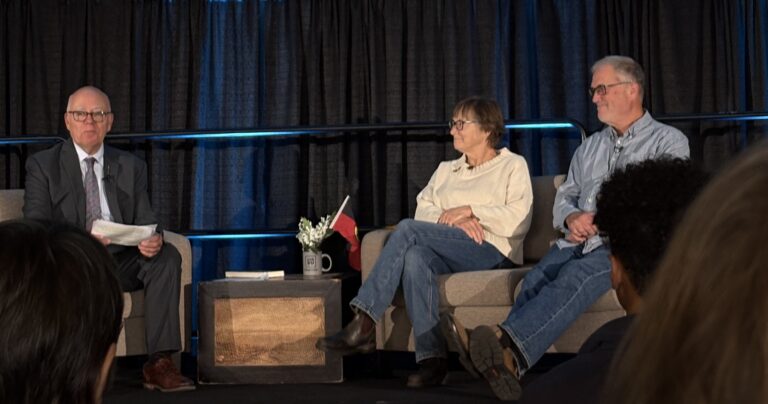
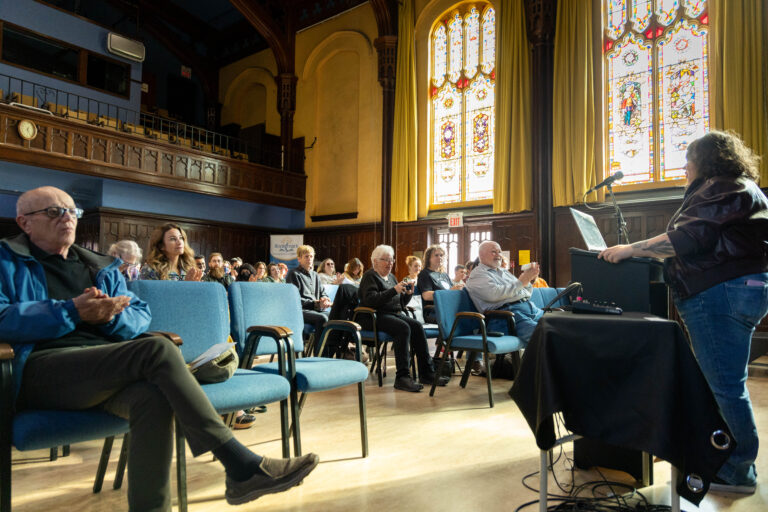
As part of their dissemination activities, the centre is currently organizing a conference that aims to engage the community, raise awareness, teach how the services offered for women who suffer intimate partner violence can be improved and break the stigma that surrounds the issue.
“Once you understand vulnerability and how it impacts someone’s well-being and quality of life, I feel I have a better appreciation on how to address it and how to approach it,” said Gagnon.
The conference is a two-day event that will occur from Oct. 23 to 24 at the Wu Conference Centre at UNB.
Guest speaker Janice Du Mont will open the conference with an explanation of intimate partner violence and what the contributing factors are that make it a different situation for older women vs. younger women and older women vs. older men.
Du Mont is an associate professor and the director of the Collaborative Specialization in Women’s Health at the University of Toronto School of Public Health. She is also a senior researcher in the Women’s College Research Institute.
The second day of the conference will feature two panel discussions in the morning and several workshops in the afternoon. The first panel will discuss abuse faced by older immigrant and Indigenous women, including both rural and urban perspectives. The second panel will talk about government services available in New Brunswick, Nova Scotia and Prince Edward Island.
Gagnon said that we need to change societal stereotypes of the elderly and reach out more effectively to those who need help.
“Aging is not a disease; you can’t cure aging,” she said. “Older adults have a lot more to offer than we recognize in a lot of ways. They are keepers of knowledge, and though they may sometimes not have the physical abilities to do things, they certainly have experience and perspective that we younger adults don’t have until we get there.”