



The fate of Indigenous languages is not only a Canadian issue but a global one. In a 2019 speech, the President of the United Nations explained that globally approximately two Indigenous languages go extinct per month. That tragedy is too devastating for words.
In Canada, residential schools created a lasting impact on Indigenous language. Children were removed from their families, not allowed to speak their languages, and subjected to repeated abuse for engaging with their own culture. Residential schools were very nearly responsible for the destruction of several Indigenous languages, but, thankfully, there are now many people involved in trying to safeguard Indigenous languages across Canada so that they will not be forgotten.
“I think that our languages are not as valued and that probably stems from systemic racism against our people, our language, and our culture over time” said Starlit Simon, the Nata’ilsuteget (Indigenous Student Advisor at UNB).
However, initiatives at the Mi’kmaq-Wolastoqey Centre are working against that racism so that Indigenous languages can not only survive, but thrive.

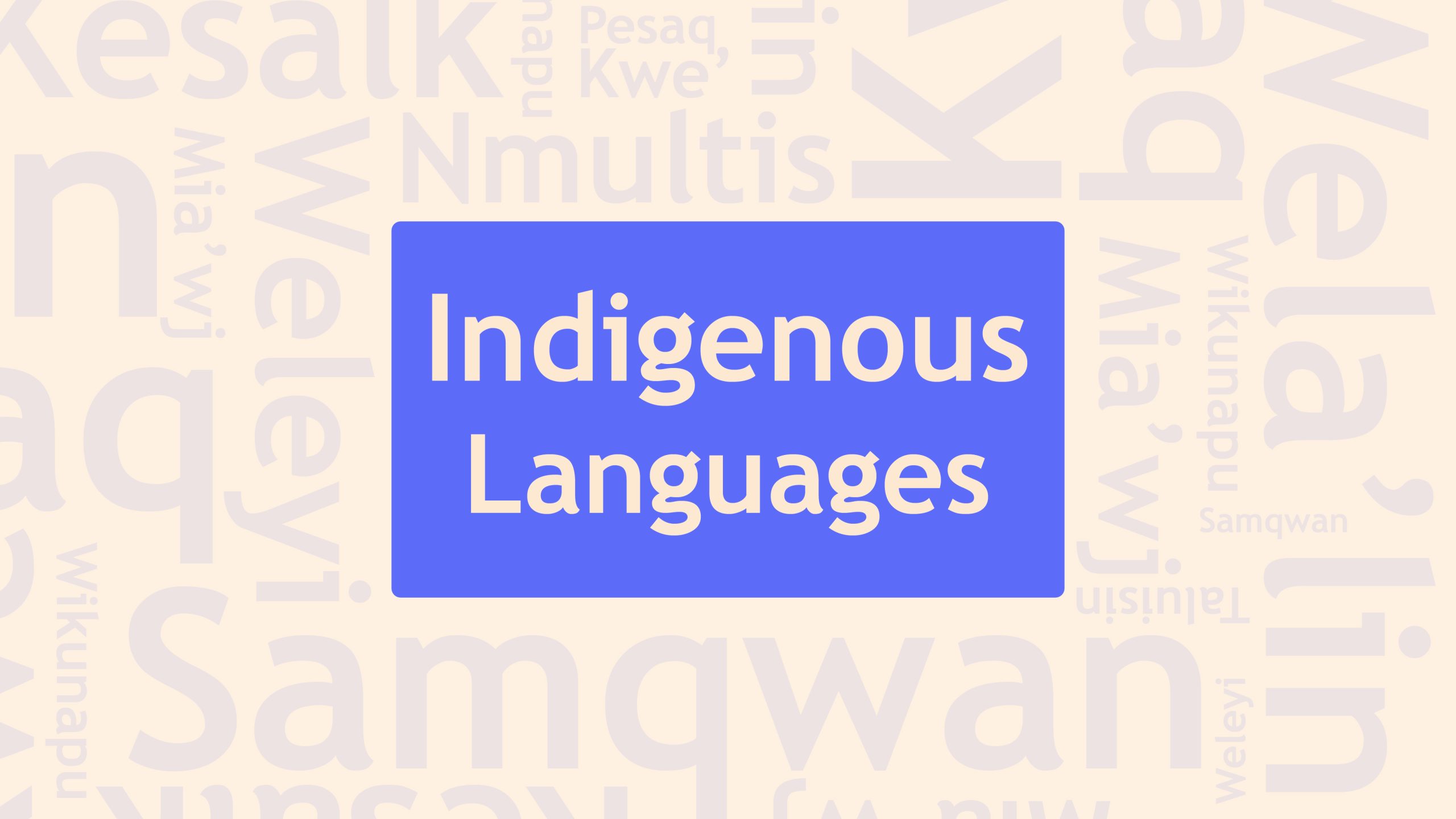
Mi’kmaq and Wolastoqey languages are two Indigenous languages spoken in New Brunswick. Although recently there has been a resurgence of efforts to give the language back to people who have lost it, systemic racism and issues of access continue to put more value on English and French. There are a few Mi’kmaq words in the graphic below, but if you are interested in learning more of the languages, there are a few apps out there which can be helpful. Developed at the Mi’kmaq-Wolastoqey Centre, Tal-Tluen, L’nui’suti, and Wolastoqey Latuwewakon are available for download on both IOS and Android. These apps were created so that everyone can have access to Indigenous language and learn more about traditional languages of the region.