



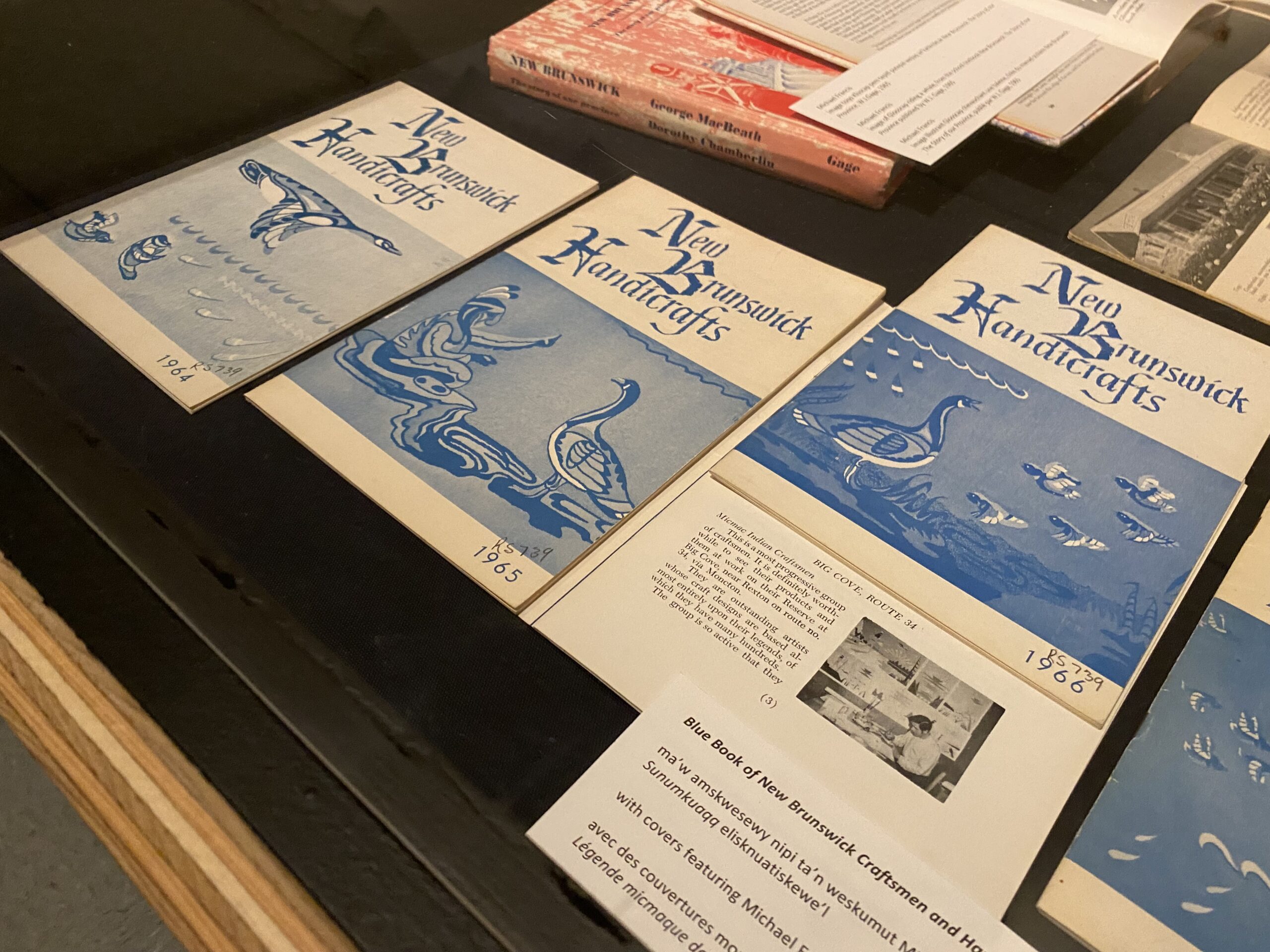
Wabanaki Modern is a beautiful and extensive exploration of the “Micmac Indian Craftsmen” (MIC) movement out of New Brunswick’s Elsipogtog (then called Big Cove) during the 1960s.
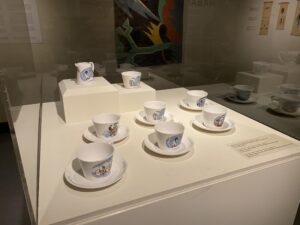 Wabanaki Modern, both the exhibit at the Beaverbrook Art Gallery and the book, are breathtaking examples of the wonderful art our indigenous communities can produce. The exhibit and book showcase a wide variety of mediums including tapestries, enamel cups, and prints.
The movement that created these pieces was funded by the Canadian Government and continued through the 1960s. Indigenous artwork from Elsipogtog was even featured at Expo 67 in Montreal—a celebration for Canada’s centennial year.
Funding—while a pittance in retrospect—allowed a former schoolhouse to be converted into an art studio where Indigenous artists could create the beautiful works displayed in both the book and exhibit versions of Wabanaki Modern. Unfortunately, in the late 1960s, the Canadian government pulled funding from the MIC.
Despite the short-lived nature of this artistic movement, Wabanaki Modern showcases the extensive body of work that Elsipogtog’s craftspeople were able to produce.
Interestingly, the book form of Wabanaki Modern also brings up questions about the role of capitalism in Western and Indigenous society. A major point in Wabanaki Modern is the fact that Indigenous artwork that was previously personally fulfilling pre-contact became a mass-produced commodity for Euro-American consumers. The greatest example of this system is the incredibly high-quality woven baskets produced by Indigenous groups in New Brunswick that were coveted by many European settlers.
Despite the looming shadow of capitalism, the artwork from the “Micmac Indian Craftsmen” includes many cultural and spiritual motifs that transcend a purely commercial agenda. These stories include the prominent “The Legend of Glooscap’s Departure”—featured on the cover of the book—and the “Legend of the Little People” that appears on a set of ceramic cups.
While the MIC’s artwork was deeply rooted in Wabanaki stories handed down through generations, the work itself was often minimalist and certainly contemporary for the 1960s. The modern feel of the work coming out of Elsipogtog undoubtedly contributed to the movement’s wider success across Canada. As the first officially funded Indigenous artists in Atlantic Canada, works from Elsipogtog made their way from coast to coast featuring in print media, art summits, and Expo 67—as mentioned above.
All the MIC’s artists spoke Mi’kmaw as their first language and were led by local Indigenous artists Michael Francis and Stephen Dedham.
Both the book and exhibit versions of Wabanaki Modern breathtakingly present this important part of Indigenous and New Brunswick history. Both explore more than just the art itself, highlighting the people behind the MIC movement.
Wabanaki Modern: The Artistic Legacy of the 1960s “Micmac Indian Craftsmen” is on display at the Beaverbrook Art Gallery until February 26, 2023, and Wabanaki Modern is available from Gooseland.