



“If what you do is selfish, you will not succeed. But your run is for a good cause. All good intention have good ending.”
The Dragon Run, a travel memoir by UNB instructor Tony Robinson-Smith, is a recount of the author’s time in the Kingdom of Bhutan as an English teacher. While in Bhutan, he had the idea to run across the kingdom in order to raise money for in order to send children to school. Along with his wife, Bhutanese students and a stray dog, the author ran the “Tara-thon,” a name that combined ‘Tarayana,’ after the Bhutanese Tarayana Foundation that helps communities in need, and ‘marathon.’ The run raised enough money to send 330 children to school.
Robinson-Smith penned a vivid story of their journey: a narrative rich in culture, adventure and generosity. Throughout the book, one grows fond of Bhutan, a country that measures “Gross National Happiness;” its people; landscape and beauty as seen through the author’s eyes. It is a true celebration of culture and humanity.
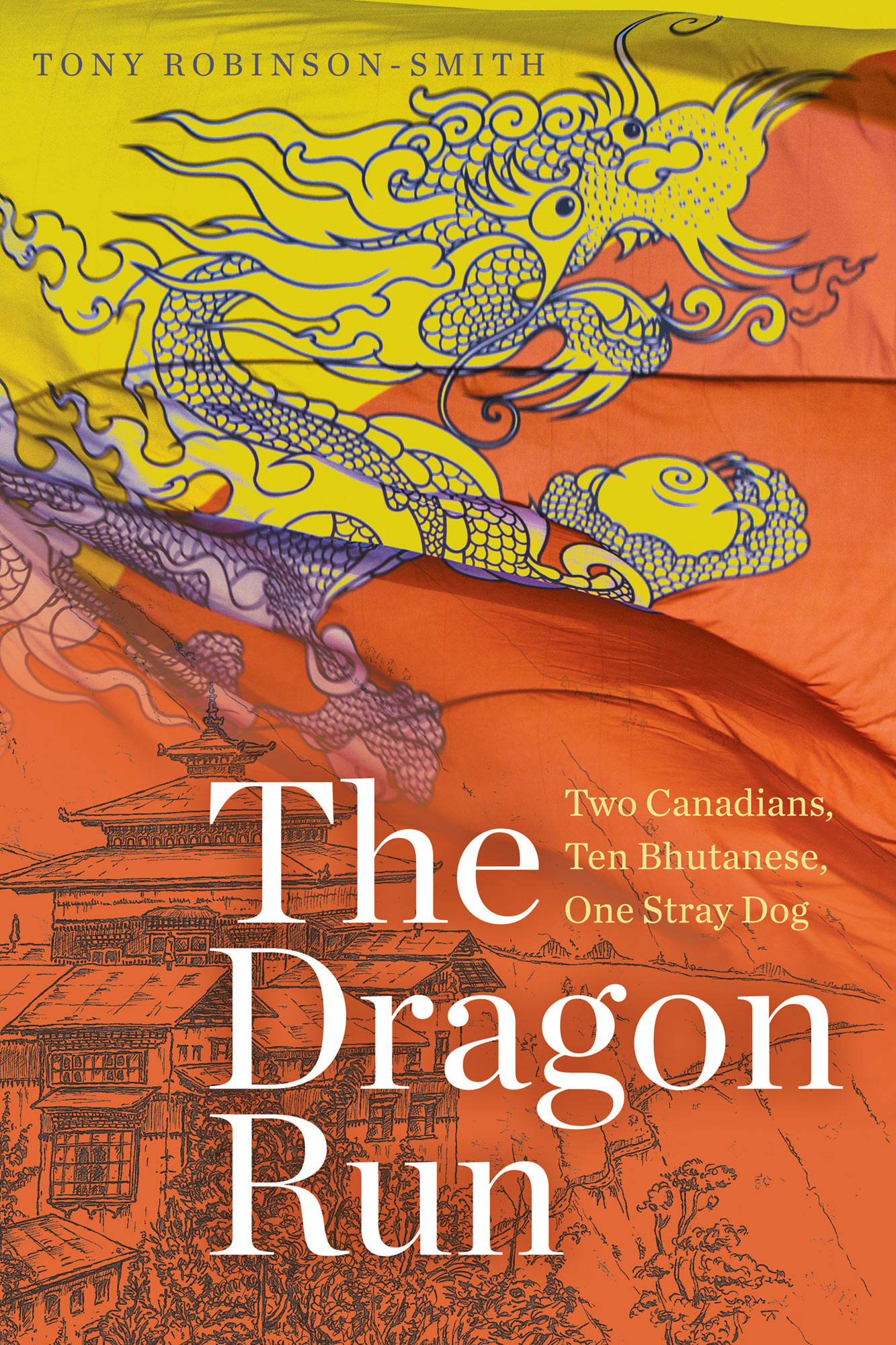
The story, however, is not the only thing that makes the book unique. The book’s cover and title both reflect what the entire book is about—though one needs to be familiar with Bhutan, or its flag at the very least, to pick this up quickly. Nonetheless, they contribute to the author’s evident celebration of the beautiful South-Asian kingdom. The book is also filled with photos and illustrations by the author—something that sets it apart from a typical travel memoir—and adds to the depth of the story. One other unique feature that stood out to me was the fact that the locals were quoted in the book and none of their grammatical errors were corrected. This was something that added to the book’s authenticity.
Lastly, even though The Dragon Run, as a travel memoir, would appeal more to readers interested in sports, adventure and travel, I believe that it tells a story that is worth being read by all kinds of readers alike.
To gain more insight on the book, why it was written, and who the intended audience is, I interviewed Tony Robinson-Smith, the book’s author.
The Brunswickan: What is one thing you hope the people who read The Dragon Run take out of it?
Tony Robinson-Smith: That, cliche though it is, you can make a difference when posted to a developing country. Spend time with the local people; try to gain an appreciation of their challenges and ask yourself how you might contribute. I hope my readers will be inspired to go far afield—way out of their comfort zone, to use another cliche!—exercise their imaginations and launch projects of lasting value.
The Bruns: Would you do anything differently if you were to re-write this book? If yes, what would it be?
TRS: I would like to have included more stories of our experiences before undertaking the Tara-thon. There was quite a lot of cutting at the editing stage of the project [with University of Alberta Press].
The Bruns: In the epilogue, you mention one question you asked yourself after your time in Bhutan: “Though we went to help out, have we in a sense, hastened its Westernization and so been instrumental in eroding its Traditions?” What are your thoughts about this now? Have you gained anymore appreciation for the amazing work you did in Bhutan?
TRS: I think this reflection stands—and the explanation that follows—that the Bhutanese we came into contact with might wish to enjoy our level of affluence (expressed through the possessions we displayed). If we had not been there, they may not have desired the things we carried, the opportunities we enjoyed. In Buddhism, desire leads to suffering.
The Bruns: Throughout the book, there are many incredible illustrations drawn by you. I think they personalize the experience and give the readers a “first-hand” kind of story. Is that what you were going for when you included them?
TRS: The illustrations serve both to support the text and break it up. Thus, my hope is that, with them, the reader will find my book more approachable. Few travel memoirs have illustrations, so I also wished to do something different—make my book distinct in the genre.
The Bruns: The Dragon Run is full of adventure, something that makes a great travel memoir. Though there are many insightful aspects of the book that draw readers with different interests, who would you say was your target audience when writing this book?
TRS: I hope there are several target audiences: ultra-marathoners, travellers interested in visiting places a little off the beaten track, volunteers who take up postings abroad (especially in developing countries), those intrigued by the concept of Gross National Happiness, armchair travellers generally who like to read of real-life adventures, those who are interested in what Canadians get up to overseas…