




Election season is upon us. This is a time when a spotlight is shone on the issues most pressing to Canadians as they are brought to light on the national stage. Our national leaders debate these issues and present their plans to solve them. There is one critical issue that is not getting the attention it deserves, however. That issue is youth mental health.
Canada’s youth mental health statistics are staggering. An estimated 10%-20% of youth in Canada suffer from a mental illness or disorder. Suicide is the second leading cause of death among 15-24 year olds in Canada. This accounts for 24% of all deaths in this age bracket, making this the third highest suicide rate in the industrialized world. Furthermore, only 20% of youth who need mental health services receive them. This crisis is even more pronounced in New Brunswick where the hospitalization rate for youth suffering from mental health related issues is nearly double the national average.
Youth mental health is clearly an issue that demands attention. A recent poll shows that 96% of Canadians think improving access to mental health services is important and one third list it as an important election policy. This is an issue that Canadians care about, but what are our political candidates saying about this? In the days leading up to the federal election, mental health should be a hot button issue. Shockingly however, very little about it has been said on the campaign trails and in official platform materials. Mental health was not even a featured topic in any of the debates.
The problem is more than just the shortage of discussions on youth mental health. It is the lack of substance in these discussions. The four major political parties all mention mental health in their official platforms, with each promising to make mental health services more accessible and affordable. This is great, but it is as if these paragraphs are simply inserted in their campaign materials so the parties can say they have something in their platforms about mental health. How exactly is this going to be accomplished? Where are the concrete plans? The Canadian Institute for Health Information identifies four gaps in mental health care delivery: service availability, service integration, timely access, and the transition between child/youth and adult services. One way to shrink the service availability gap is by fairly compensating mental health service providers. In New Brunswick, front-line service providers are grossly overworked and underpaid. One agency serving at-risk youth said that 2018 marked the worst year for recruiting and retaining staff in recent memory. No doubt low wages played a part in this. The New Brunswick median wage for mental health workers is the lowest in the country at $15.85 an hour. That is over five dollars below the national median. This is simply unacceptable. If mental health services for our youth are to be accessible, there must be sufficient and qualified people to provide these services. These professionals should be fairly compensated for what can be very physically, emotionally, and mentally taxing work. Higher pay would help attract and retain higher skilled staff to work with these youth while also improving the quality and accessibility of the services they deliver.
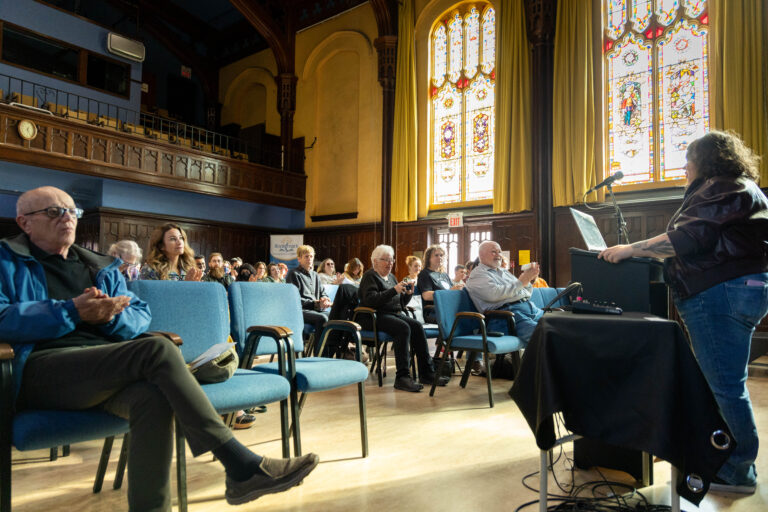
Another way to address the service availability problem is by decentralizing youth mental health service organizations. Advocates at a recent community meeting hosted by Partners for Youth expressed their desire to see health and support services for youth spread throughout the province in various communities instead of in one central location. By spreading these support services throughout the province, they become much more accessible to youth living in rural areas and to families who cannot afford to travel long distances to get services for their children. Section 7 of Canada’s Charter of Rights and Freedoms states: “Everyone has the right to life, liberty and security of the person and the right not to be deprived thereof except in accordance with the principles of fundamental justice.” With the lack of current government plans, it is hard to see how these rights are being upheld for youth suffering from mental health issues. By not having timely and sufficient access to the care that they need, young people with mental health issues are being barred to their right to life, liberty and security of the person. Politicians will say that progress is being made. New Brunswick Premier Blaine Higgs acknowledged in a recent interview that there is a mental health crisis in this province. He calls for action and a “meaningful response” to this crisis. Indeed, some meaningful measures have been taken. Earlier this year, wage increases across New Brunswick benefitted 10,000 workers providing direct services to vulnerable people, including those with mental health issues. This is a step in the right direction. However, even with this wage increase, New Brunswick is still nearly two dollars an hour behind the next lowest province. There is still much work to be done.
Youth mental health is a national crisis with its effects being felt especially strongly in New Brunswick. Mental health issues should be more than just a political talking point at any time, but especially now as the federal election is quickly approaching. Youth mental health should be at the forefront of our national leaders’ policies with concrete goals and realistic action plans put forward to meet these goals. Politicians running for a seat in Parliament need to know that this is an issue that cannot be ignored or simply glossed over. Now is time to stand up for the mental health needs of Canada’s young people and put pressure on our political leaders to make this a prominent issue in their platforms. Canada’s youth deserve it.