



Music, an art form that some consider to be timeless, can carry emotion and meaning across the centuries. Jeremy Dutcher certainly believes so, as his work “was always about time travel in a way, and transcending those strict bounds of temporality.”
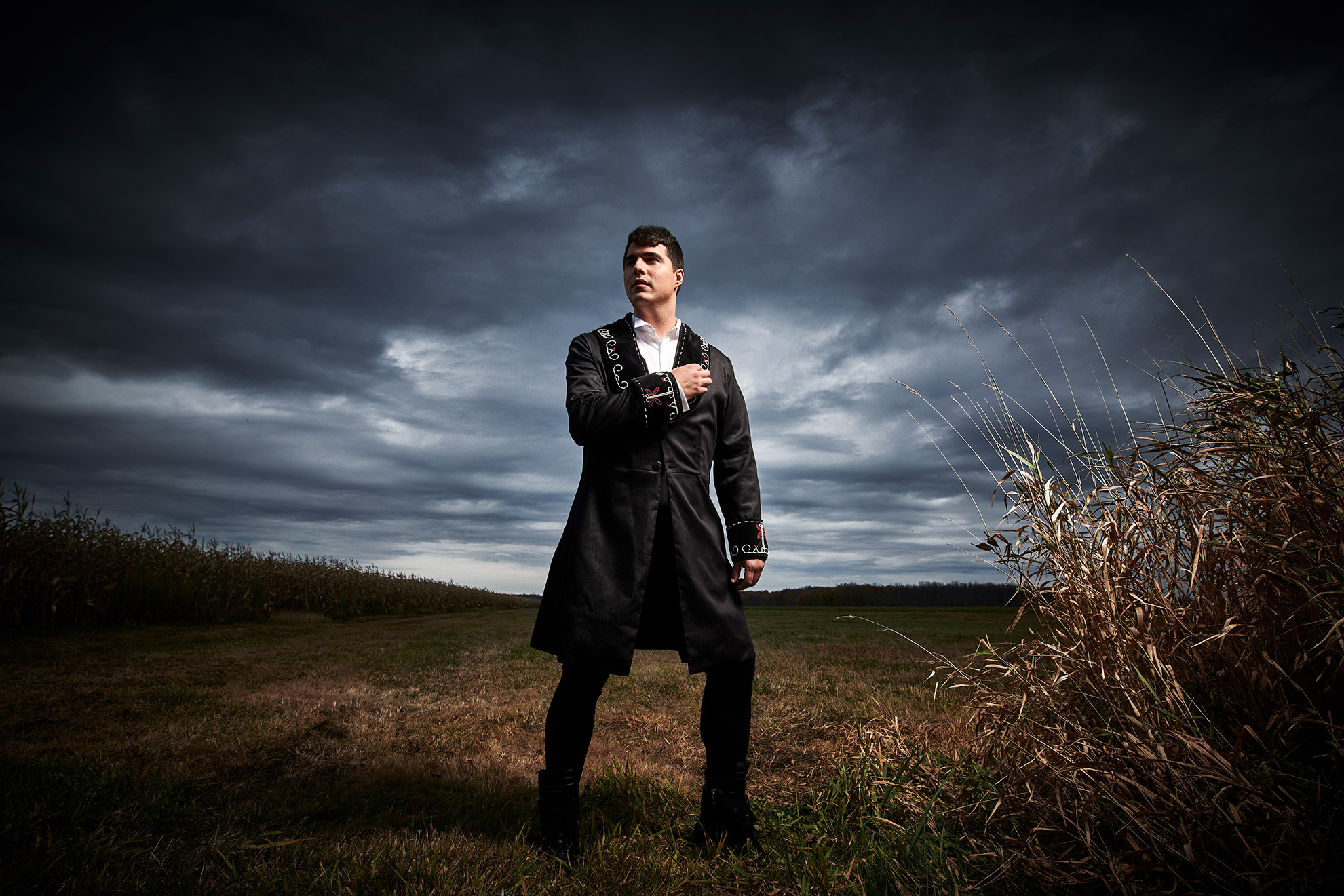
Dutcher is a 27-year-old Wolastoqiyik musician and activist from Tobique First Nation. His latest Wolastoqey album Wolastoqiyik Lintuwakonawa: Our Maliseet Songs, is not only diversifying the range of languages in Canadian music, but also actively sharing the Wolastoqiyik and wider Indigenous perspective with Canadians. His album has received critical acclaim; so much so that he has been awarded the 2018 Polaris Music Prize for his work.
Speaking to his time at Dalhousie University, Dutcher said, “I didn’t see any kinds of music that spoke to me, and who I was as a cultural person, and as an Indigenous person. So, you know when you don’t see something in the world, you just have to go and create it.”
This desire to see more Indigenous artistic representation led him to Maggie Paul, a “song-carrier” and elder from St. Mary’s First Nation. She informed Dutcher of an archive in Ottawa at the Canadian Museum of History, containing wax cylinder phonograph recordings collected by ethnographer William Mechling in 1900. These recordings hold traditional Wolastoqiyik songs sang by Dutcher’s ancestors. Mechling felt the need to collect these songs, as the Indian Act of 1876 strictly limited the expression of all public Indigenous art and culture, leading to a decline in the preservation of traditional music.
That desire is still a major factor driving Dutcher to create music in his language, as “there’s less than 100 fluent speakers of Wolastoqey in our community.” Dutcher elaborated on this further: “When our elders tell us to do something we ought to if we’re wise, we should listen and follow along.” In that regard, he travelled to Ottawa to find these precious records. “It became very clear to me after hearing them that these voices from 110 years ago needed to be brought forward.”
Dutcher’s album allows him to open up a dialogue with his community, other Wolastoqiyik communities and the larger Indigenous population. The response has been overwhelmingly positive: “[There were] lots of people reaching out on social media and saying ‘Hey we love this record and a lot of our young people are really excited to hear music in their language.’”

This perspective switch has been interpreted by Dutcher as “making music on our own terms” and “sharing something in a way that’s very centered in our own perspective.” This statement might not seem like a revelation in our time of growing cultural acceptance and public tolerance; however, when this change is put into a historical context, the conversation is much more fascinating.
“When you think about how quickly the conversation has changed within one generation or two generations it’s incredible,” said Dutcher. He says Wolastoqiyik music wasn’t often spoken of in past generations; it wasn’t something that was shared or considered a point of pride. “But here we’re doing so and being unapologetic about who we are, and I think that’s really exciting when we can connect with our older people and show them that it’s okay. We’re in a different time and in a different space, and we’re welcomed now like we have never been before, so let’s share some truth.”
As Dutcher continues his mission to spread Indigenous truth, there is some heavy responsibility that has not been lost on him. “Our elders are saying all the time, that this information needs to come out and people need to know about it. In terms of being a song carrier and someone who was trained in that way, it’s a big responsibility.”
Dutcher “wrote this record at the piano and a string quartet, which are very Western instruments,” and found it challenging to transpose an Indigenous music style onto instruments that developed apart from Indigenous peoples and cultures. “There were sort of these irreconcilable spaces that didn’t quite fit, but that’s where the interesting difference lies.” Instead of trying to force together Indigenous and Western ways of creating music, Dutcher says he wanted to highlight their distinctions and contrasts.
This exemplifies the dialogues that still need to happen between settler descendants and Indigenous peoples in Canada. Dutcher is aware of how these auditory clues apply to much more than his music: “It was about putting things on a level playing field and honouring both musics equally for the first time, and saying ‘okay how do these actually work together if we take away all the years of colonization and shame that has gone into suppressing our musical traditions here and across Turtle Island [the term for North America according to the Wolastoqiyik and other First Nations’ spiritual history].”
In Dutcher’s journey to create Indigenous music and continue the discussion of reconciliation in Canada, his aim is to offer a culturally unifying experience. “That’s probably the best part of this job, just going around and getting to see that we’re all not so different.”