



There are five core principles of journalism: truth, independence, impartiality, humanity, and accountability. These are the values that every news source should uphold. But what happens when they don’t?
Every newspaper is owned by a person or company who has their own personal political agenda – it would be difficult for that bias not to seep into the news they publish.
The Washington Post, a popular leftist newspaper, reaches 18.4 million people every month and is owned by multi-billionaire Jeff Bezos. So a paper whose main audience is made up of people who are interested in social issues is owned and controlled by a man whose employees have to urinate in plastic bottles to maintain quota.
Lachlan Murdoch is the executive chairman of the Fox Corporation, the parent company of Fox News, and Co-Chairman of News Corp – under that banner? The New York Post. One individual is in charge of two of the most recognized and influential media companies; both of those companies openly support Trump, and have outright lied to their audiences to skew facts in Trump’s favour.
When a news source loses its independence, its impartiality, it is sure to be partial or biased in most issues. So is there a point where news stops being news and becomes glorified opinion?
These days, our news sources have expanded much beyond the traditional means of publication. Many people have turned to online sources for their daily tune-in to events around the world – blogs, websites, and social media.
According to a newly published Pew Research Center report, 55 per cent of U.S. adults get their news from social media either “often” or “sometimes.” For many people, the social media recap is much better than an actual report.
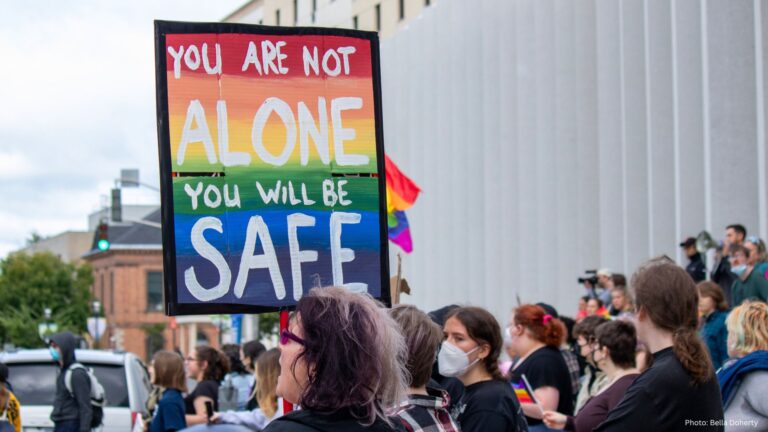
There are positive sides to this, as through social media, youth have become more directly involved in protests, as we’re seeing with the Black Lives Matter movement, social campaigns, and in the sharing of news across multiple platforms.
At the same time, while social media remains a source of news content for users, Pew’s study also shows that they are becoming more distrustful about the information shared. 57 per cent of social media consumers in the study group believe the information they saw on social media was largely inaccurate.
The information on social media is mostly subjective. It is only as accurate as the people sharing it. When anyone who has the ability to type up a post or hit republish has the ability to disseminate their ideas, is it any surprise that there are concerns about “fake news?” Despite the fact that the term has mostly been weaponized against largely reputable publications such as CNN, “fake news” is a real issue. A post can go viral and be completely unfounded. A flawed and inaccurate study can be published saying that vaccines cause autism, and be so easily absorbed that people refuse to vaccinate their children. The question of what truth is, and where one can find it, is a serious one.
So should we trust our news sources as much as we do?
It is unlikely that bias can be completely expunged from the news we receive today, but at the end of the day, we all have to take responsibility for where we get our information.