



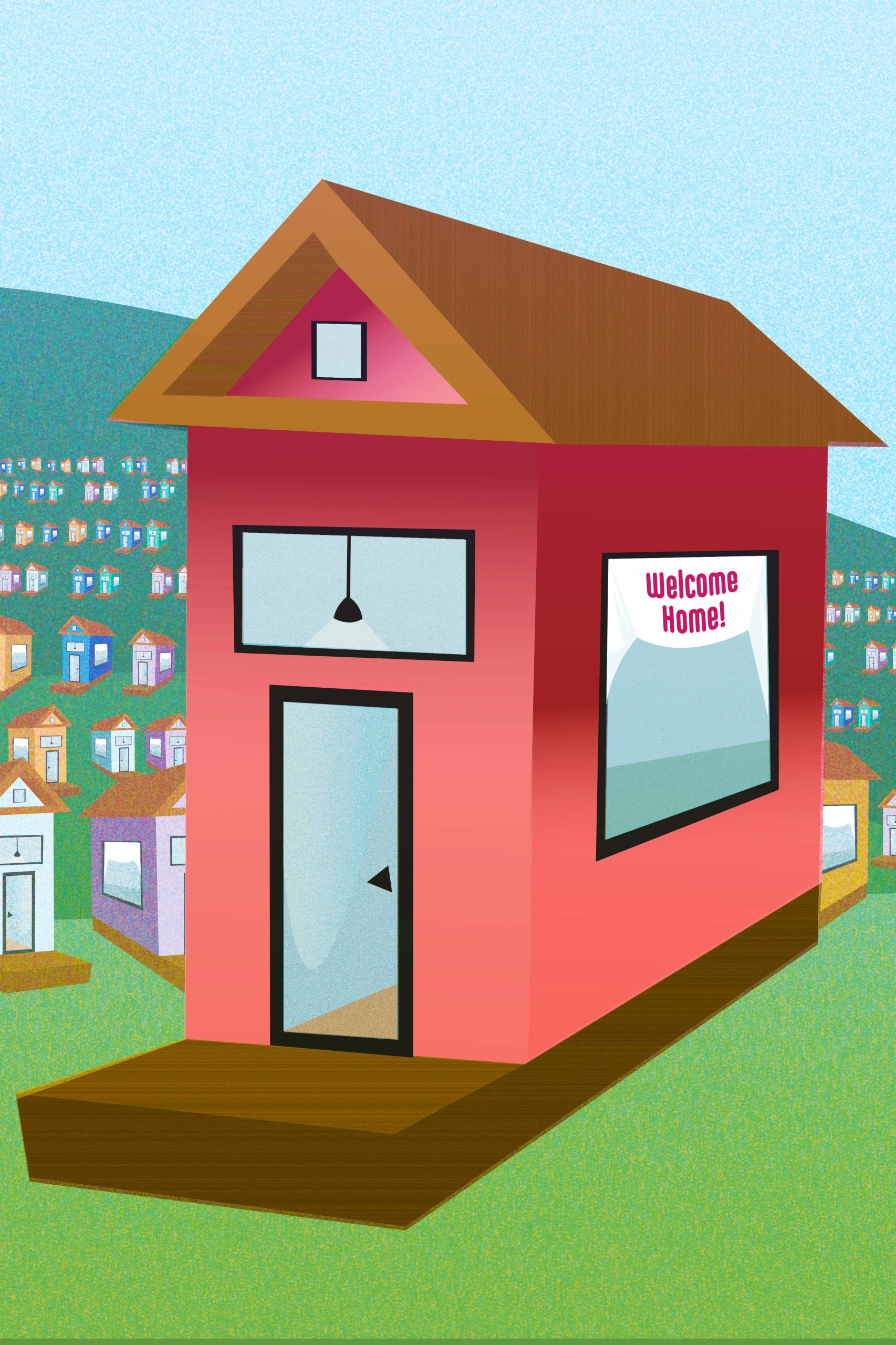
A proposal for a “managed community, reimagined” headed by Marcel LeBrun, founder of the 12 Neighbours Community, is getting ready to slide across City Council’s table to create a community of 96 tiny homes and a social enterprise center geared towards being affordable and accessible to Fredericton’s most vulnerable populations.
It was unanimously approved by Fredericton’s Planning Advisory Committee after a meeting on September 15.
“It is something that has been brewing in my mind for probably 4 or 5 years,” LeBrun explained. “I am very research-oriented. I have lots of great advisors that have helped me shape it.”
Five years ago, LeBrun began travelling to different cities to research different approaches to poverty development. His focus, he explains, is to effectively help people “go from A to B and rise up above the poverty line, get on their feet, and get in the economy.”
LeBrun’s housing philosophy stems from the well-researched Housing First model that prioritizes individuals who are experiencing homelessness’ need for permanent housing, so they are better able to either improve or receive help in improving their social wellbeing.
The idea behind building tiny homes rather than a large facility with many rooms or dorms is to provide the future community members with their dignity. Although those options are more economical, LeBrun says that they are “not a dignified approach.”
He aims for the tiny homes to provide people with more agency over their personal lives. Individuals will be able to control what their house looks like and even provide input on the rules that will be in place.
LeBrun has already consulted with residents at several of the managed tent sites around Fredericton that police oversee about what they would do if they were Mayor: “everyone seems to want and expect rules but instead of dictating them, I think it’s important to give people a sense of participation in them.”
“Community [is] a healing agent […] Community is so important,” LeBrun said.
The project is currently being funded by LeBrun himself, at a cost of $40,000 per tiny home, but will be working with the province’s Social Development Department under their Affordable Rental Housing Program that is funded by the Federal Government and administered by the Provincial Government in order to build affordable housing units. He adds, “[they also] provide rent subsidies to individuals who qualify.”
The current program requires an individual assessment and a charge of one third of the individual’s income for rent. LeBrun illustrated how the program works by explaining that, “if someone is on social assistance at $600 a month, they might only pay $200 a month for their rent and the province supplements the rest up to $600 a month.”
The income from the renters and the province together is what will fund maintenance and support operations of the homes over the long-term.
The social enterprise center will be home to businesses geared towards training, and designed for community members to be able to develop new skills or hone in on ones they already possess. It will also be home to a common area with access to laundry facilities, seating areas, and television.
Residents will also have the opportunity to take part in building the tiny homes on-site as a type of construction-style skills training.
The social enterprise center is not intended to be profitable, but mission-oriented. If the businesses do become profitable, LeBrun’s plan is to hire more people in order to provide more opportunities within the community.
Residency in the community is already in high demand. “I didn’t think I had to answer [how to apply] too quickly,” he laughed. “But over the last three days, I’ve had so many people say, ‘how do I get in?’ and at the moment, I say follow our Facebook page […] but [I am] also directing them to Social Development.”
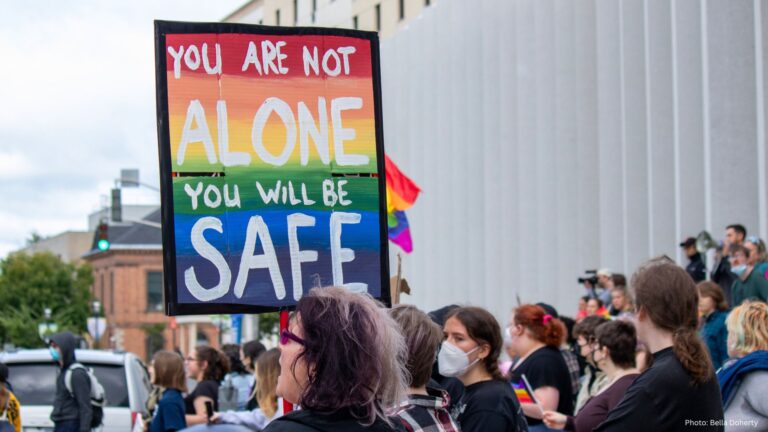
When someone gets approved for a house in this community, “it’s their house for life,” LeBrun said. “That’s important because as soon as you put a timeline, you create a lot of stress, and you create a lot of anxiety. We want to take that away and say to people, you’re safe now. This can be your forever home.”
Phase 1 will see twelve tiny homes built and move-in ready by the end of 2021 pending approval of City Council on September 27 followed by a third reading on October 12.
There are currently 6000 people on the waitlist for affordable housing. LeBrun said, “we’re going to try and make a difference on those lists.”