



From January 17 – February 14, the UNB Arts Center will be exhibiting TRACE: Tracing the Space of the Refugee Crisis. This exhibit examines the 2015 Refugee Crisis, its ongoing impact in the Mediterranian, and features 14 prints and an accompanying documentary film.
Through TRACE, artists Raluca Bejan and Ioan Cocan, and curator Natasha Lan, work to turn the gaze from the individual refugee experience to the spaces where refugees seek safety. A separate exhibit will also take place at the Beaverbrook Art Gallery from January 14 – February 7, shown in the Artist-in-Residence studio.
Dr. Raluca Bejan is an Assistant Professor in Social Work at Dalhousie University, and a former professor at St.Thomas University. With degrees from Lucian Blaga University and the University of Toronto, Bejan was also Visiting Academic at the Centre on Migration, Policy and Society at the University of Oxford in 2016 and 2018. Ioan Cocan works in media arts and graphic design, has a BA in Mural Arts and a Masters in Fine Arts, Interactive Media and Environments. TRACE was curated by Natasha Lan, a Toronto based curator and artist who is a graduate of Ryerson University’s School of Image Arts. She is currently a graduate student and an administrator in the Faculty of Social Work at the University of Toronto.
The photo exhibit examines the Greek islands of Lesbos, Samos, and several others surrounding them. It focuses on the space that holds those seeking refuge, rather than the commodification of suffering. Bejan explained that the crisis is a “structural matter,” originating in wars and issues of inequality that lead to the influx of refugees.
While the media provided coverage of the refugee crisis, it focused on the suffering experienced by those seeking asylum, and did not continue past the initial moment of crisis. Natasha Lan explained that while the media has moved on, the effects of the crisis are “still reverberating.” In the years since 2015, refugees have continued to arrive on shore.
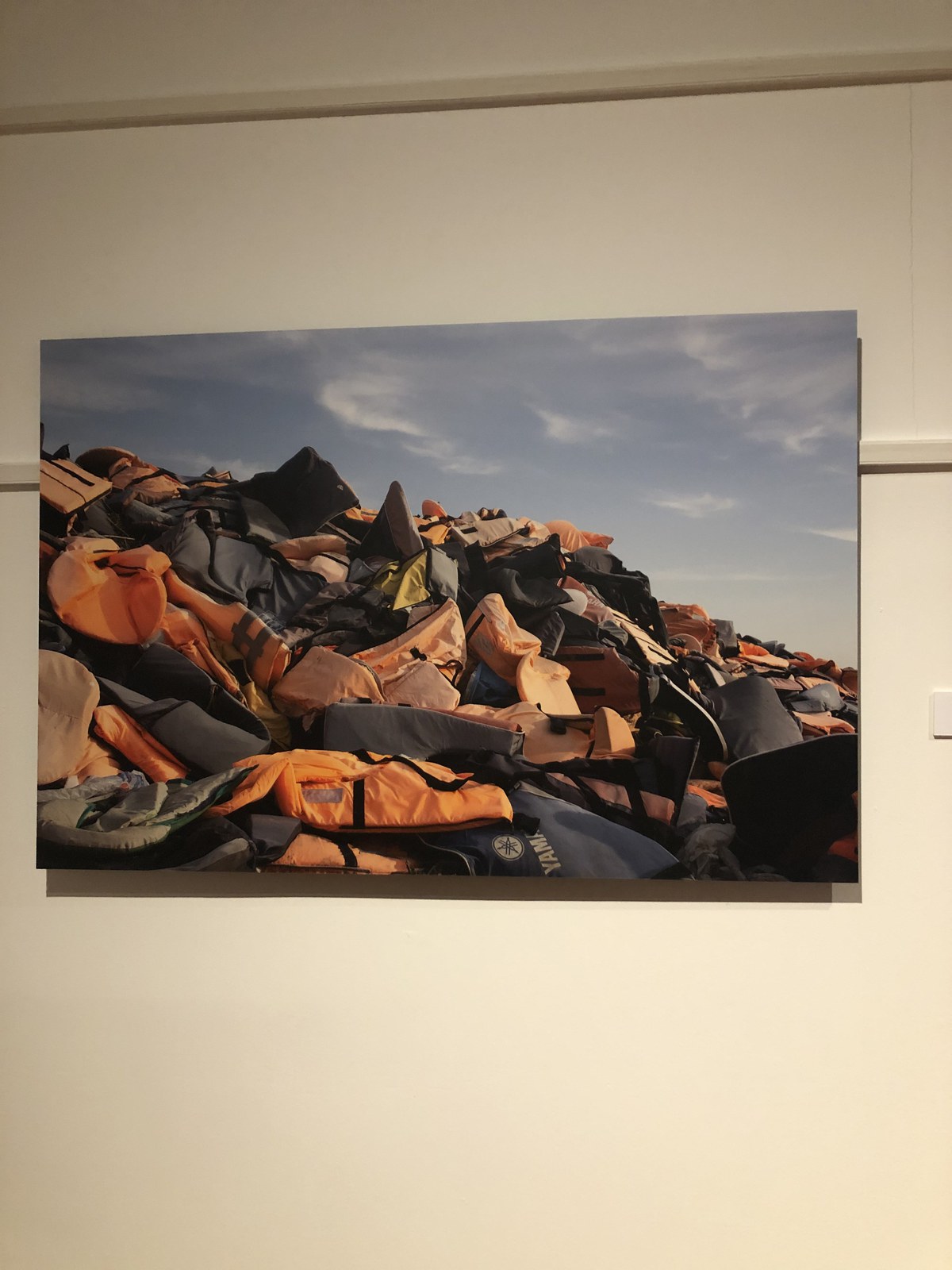
The prints featured in this exhibit are elegant in a ghostly way, and provoke concern about the fate of those who had to exist in such spaces. However, one photo in particular invokes a true feeling of fear. The photo titled “Not Named or Identified by a Name” is, as described by Ioan Cocan, a “jacket graveyard.” Lifejackets lie in large piles, as far as the eye can see, and act as “emblems of people that managed to cross and didn’t manage to cross.”
Cocan found it difficult to walk through this space, and struggled with the decision to capture this image. He recognizes that this is “not a comfortable package” and must be delivered with awareness of the suffering that led to these photos. Ultimately, he, Bejan and Lan felt that this needed to be documented with a “sense of awakeness” to demonstrate the extensive loss of life experienced by those seeking a safe haven.
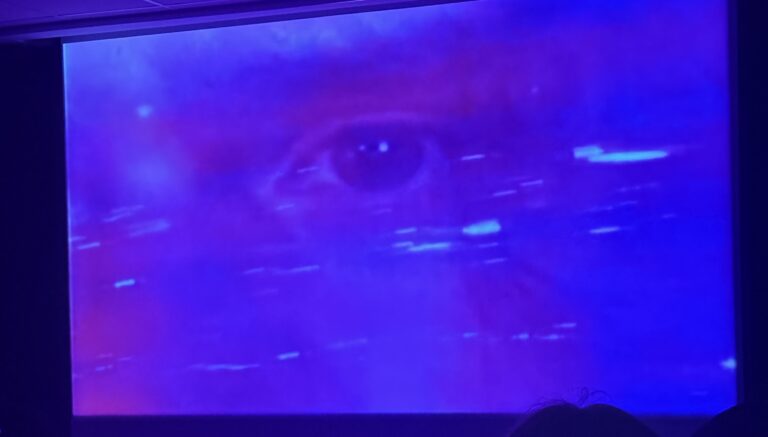
Accompanying the photo exhibit is a documentary Bejan describes as a “narrative account of the visual images.” The film further illustrates the precariousness of the endeavor to find safe haven, discusses the risks taken and features testimonials from refugees, camp workers and locals. It details the danger that was initially involved with helping refugees, as it was previously against the law to offer them a ride or give them sanctuary.
TRACE is a viciously effective exhibit that considers the largely unseen narrative of the refugee crisis and its geography. It contrasts what is shown in the media with what is happening on the ground, while also contradicting the idyllic images of the Mediterranean featured in tourism advertisements. By day, these islands are beautiful places to relax on the beach and enjoy a swim in the ocean. By night, that same ocean takes the lives of countless individuals searching for freedom, and the morning sees those beaches covered in lifejackets.