



How do students leave their mark on UNB? Academic accolades and community involvement often come to mind, but graffiti has proven to have a lasting impact as well.
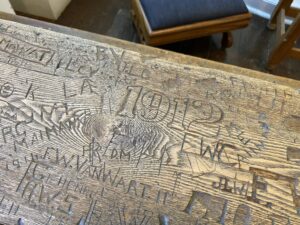
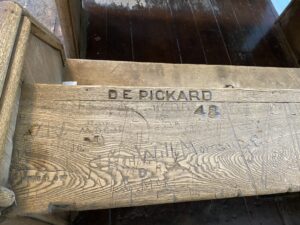
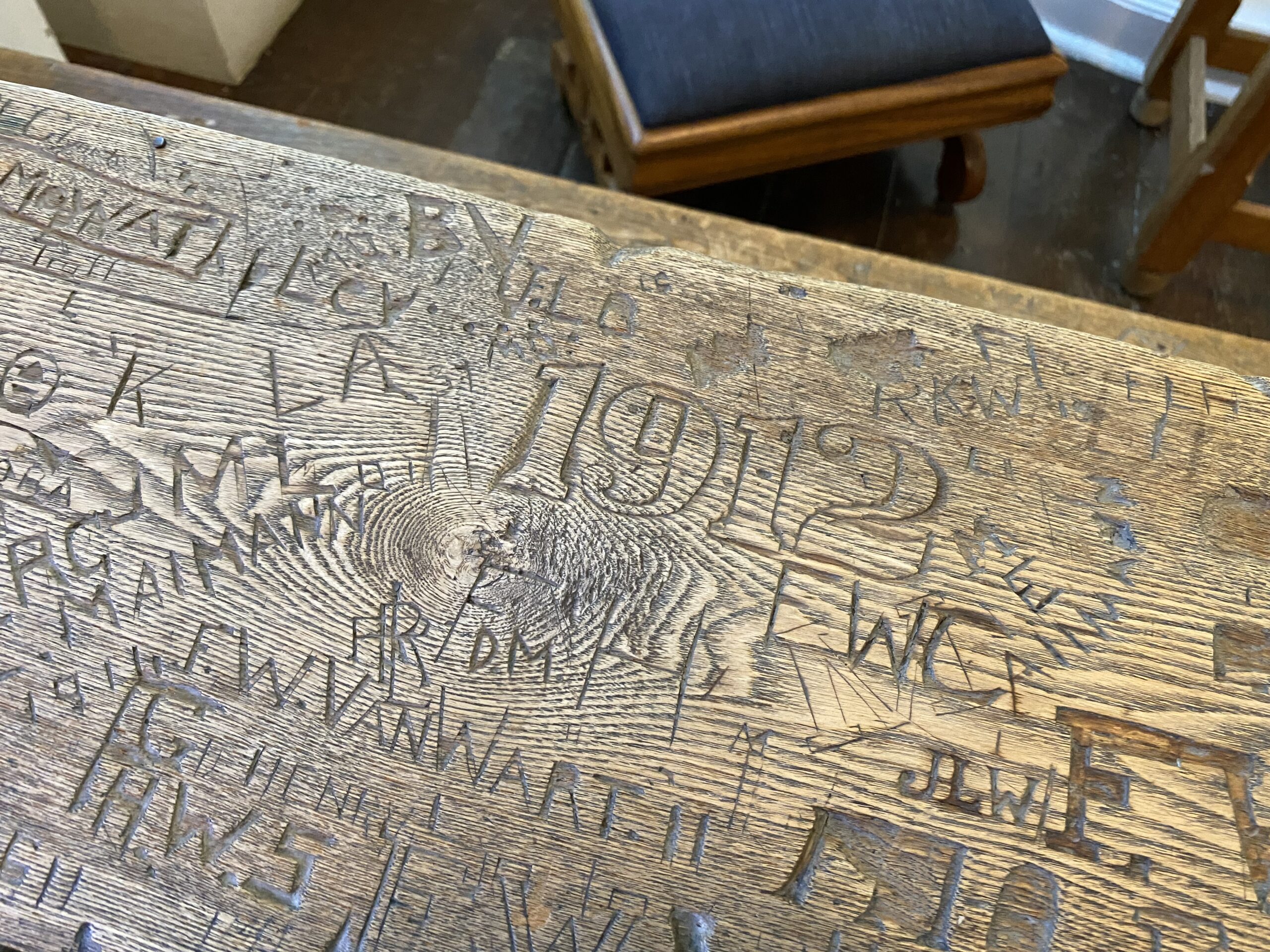
The tradition of defacing learning surfaces goes back over a century, as can be seen through the scribblings on the desks at the Harriet Irving Library’s stacks and the carvings on the Edwin Jacob Chapel’s pews in Sir Arthur Douglas Hall.
Sir Arthur Douglas Hall’s chapel has filled various roles over the past two centuries, serving as a cafeteria and classroom at different points—according to Susan Montague, who has worked with UNB in many capacities for over 40 years.
As such, the pews are covered in a century’s worth of markings, the contents of which allude to the modern day diversity of a sound cloud rapper.
These engravings follow three main themes: initials, dates, and logos—with initials making up the majority of markings. Some dates on the pews reach back to the 1910s and even the 1890s.
Of the non-initial and date markings, UNB logos make up the majority of other symbols carved on the pews, providing a window into early 20th-century school spirit. These markings suggest that students were utilizing their boredom to leave a piece of themselves to be remembered.
In contemporary fashion, rather than pocket-knife carvings, the markings between the HIL’s stacks are made with pencil or pen, with obvious attempts at cover-up in some places by a valiant painter.
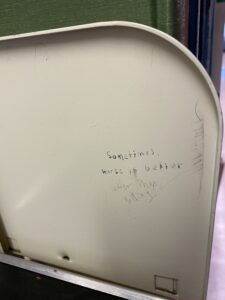
These inscriptions follow two main themes: despair and jokes. An often recurring motif is students considering dropping out. The faster medium of pen and pencil allows students to respond to each other in a game of graffiti telephone. Many of these are appeals for advice and receiving encouraging answers or sympathetic messages from other struggling students.
Many of the modern markings are clearly meant to amuse other students. Some are intricate scripts or uplifting quotes, others are vulgar and demeaning. Interestingly, some desks are covered in drawings, while others have almost none. Perhaps the habitual scribblers in the HIL are territorial?
While the marks of the past are carved rather than written, it may just be that the pencil drawings left by students a hundred years ago are lost, and were more similar to modern messages than one might imagine.