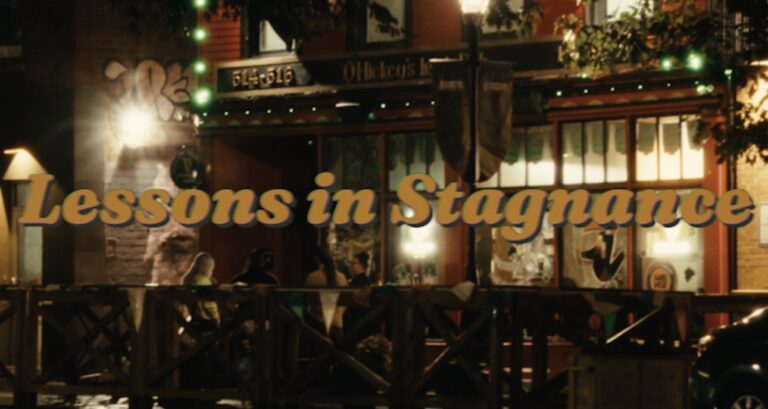




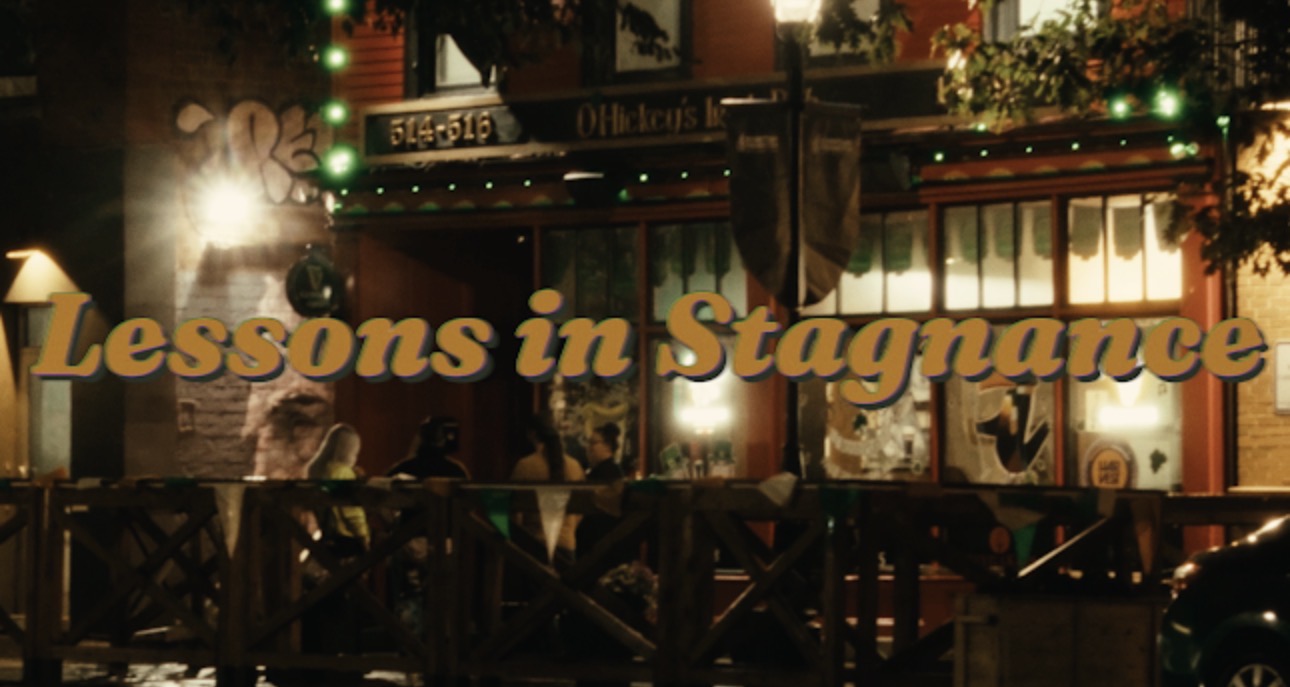
Cover Photo: Lessons in Stagnance title drop. Photo Credit: Hutch Vicaire
On October 14th, 2026, Cineplex hosted a private viewing of UNB students Hutch Vicaire and Mathieu Aussant’s short film Lessons in Stagnance. The original budget of $2300 was mainly crowdfunded until the NB Media Co-op gave the crew a Production Committee Grant that covered on-set costs such as crafts and gear. The film centres around “two codependent friends who navigate a stagnant day in a small town, grappling with insecurity and romance while avoiding adulthood.”
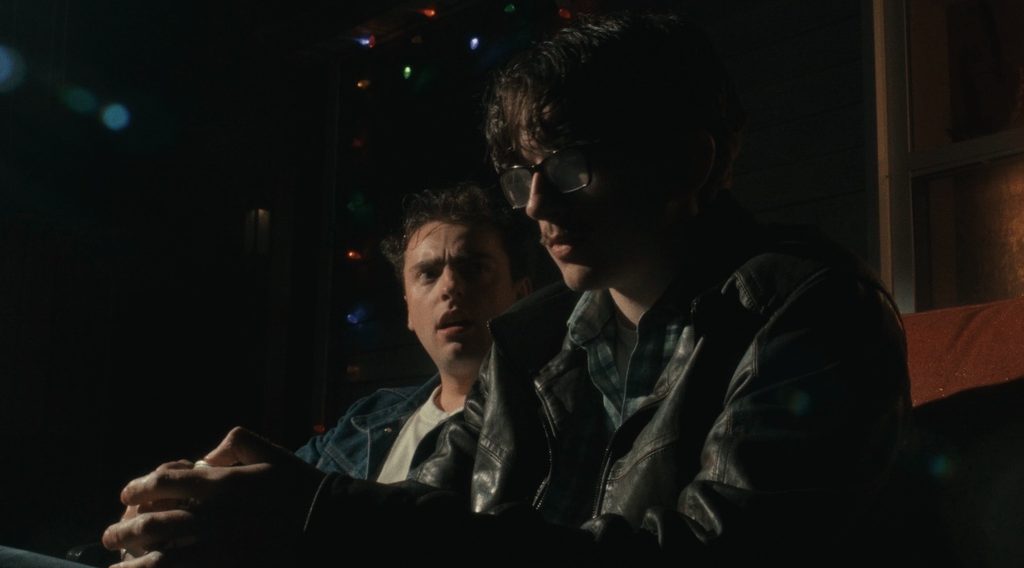
Q&A with Director Hutch Vicaire
Q: What inspired you the most when writing Lessons in Stagnance? Was there any particular era or media or event?
A: “Matt wrote draft one and sent it to me in early January 2026, and I remember reading it and really loving it; I laughed out loud, which I don’t tend to do often with scripts. Right away, we both knew that we wanted to be in the ’90s, like ’80s, ’90s, aesthetic. Because we thought it would really add to the “hangout” you know, the hangout vibe of the movie, also having no cell phones and basically recreating an age where you had nothing to do except hang out with people, even if you didn’t really want to.”
Q: What drew you into this particular genre? Was it something you were familiar with or was it a challenge to explore a new territory?
A: “I was familiar with the genre in the sense of growing up off comedies, just watching and being a fan of comedic films, even stand-up comedy and sitcoms. Every other short I made before, like the ones that I made for school, were always pretty serious. I wanted to expand my range and try to make something that I never had before. I feel like comedy is very intimidating and hard to write and produce. My instinct was to pursue that, and write that. A lot of short films are big and scaled if it’s a drama or a horror. Comedies are typically lower budget and people look at them like they’re in a lower tier, almost, at least with student shorts. Ironically, I told Matt, let’s do the complete opposite and fund raise and make it a huge set and real restaurants and bars. Make it big scale, because it is a comedy: we subverted people’s expectations.”
Q: What role would you say Fredericton, New Brunswick has in your direction, if any?
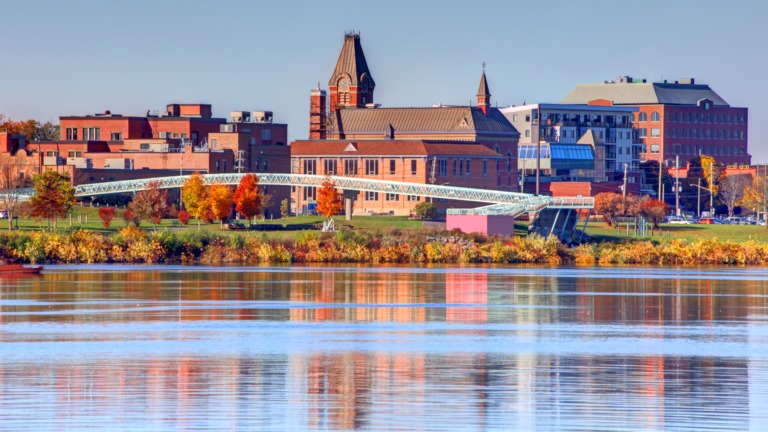
A: “Fredericton was a huge inspiration. We wanted to feel very proud of New Brunswick. I think any small town that people grew up in would feel related to this movie, because I grew up in a very small Indigenous community four hours north from Fredericton, where all we do in this movie is all I did. You go out and just do things with your friends that you’ve known your entire life, even if you’re fighting or even if there’s nothing to go out and do. Matt and I were talking that we wanted to feel very Canadian. A lot of films always try to hide that and try to fake it. You’ll see a movie shot in Toronto, the story says it’s in New York, and you know that’s Toronto. We figured, why not flip it and be proud of the locations in the city?”
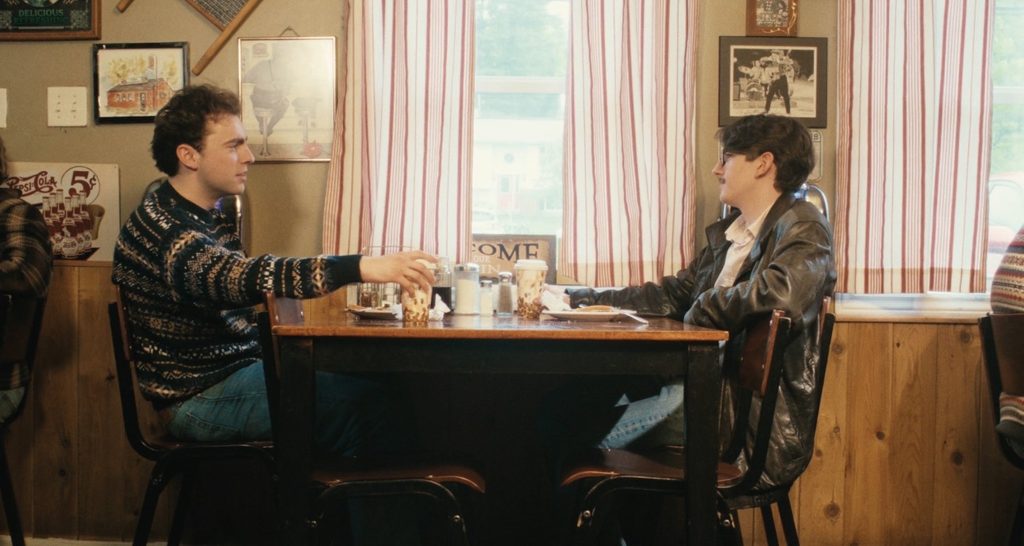
Q: What advice would you give to young or student directors?
A: “I would say it sounds kind of cliche, but to just go out and do it. No matter how, if you feel scared and you feel insane for doing it, then to me, that’s all the reasons to go out and do it. You have to almost be insane, and I guess some people would say delusional, to pursue that. I would just dream big. If you think you can make it, get a group of people. You don’t even really have to know them. You can just reach out to them. A lot of this crew, I wasn’t friends with or didn’t really know prior. I messaged them, and they all said they would love to be part of it. Now I’m all close with them. I think just knowing your environment, don’t let yourself worry if it’s going to be bad or anything. Just go in and make it, and then figure it out. You never know what your movie is until you go out and make it.”
Q: What festivals will Lessons in Stagnance be screening at? Will it be available for mass viewing in theatres in the future?
A: “It’s going to be screened at a lot of festivals. I actually just started the festival submission run two nights ago, and it’s already been submitted to around six festivals throughout Canada and America and even the world. I’m going to submit it to TIFF (Toronto International Film Festival) as well. I just submitted to an LA Short Film Festival called HollyShorts. It will be available for mass viewing late 2027!”
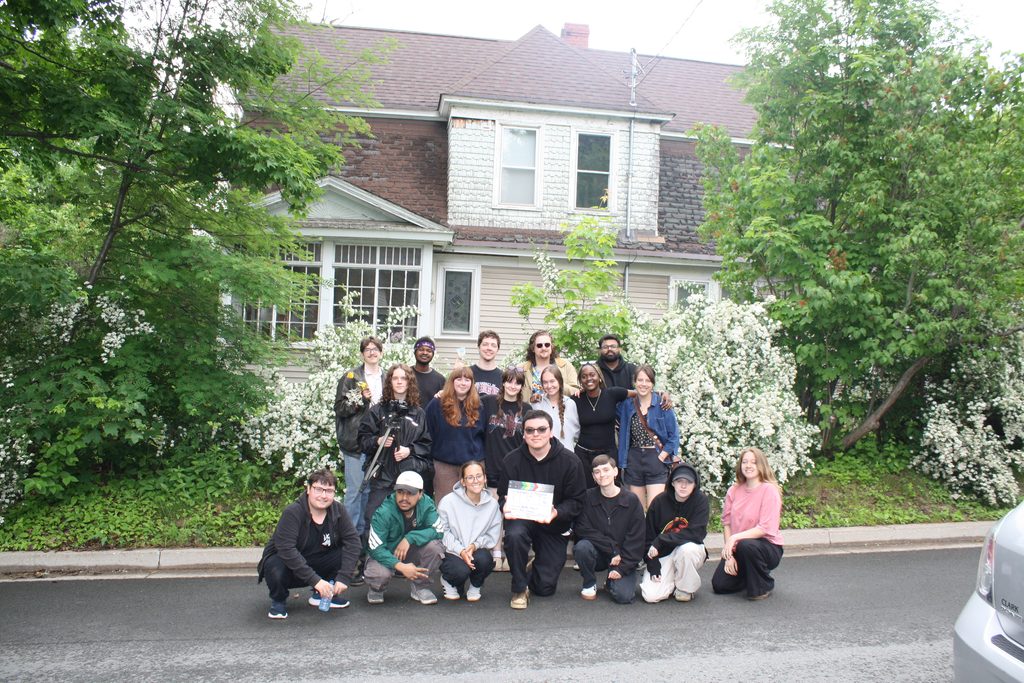
Quotes from the Cast and Crew
Matt Aussant: I wrote the bones of it months back in January I think, about myself and my best friend. It was kind of something I did to occupy time. Later it really seemed to catch on, when Hutch decided to put it in motion—we really got going. My role was most of the writing with Hutch supervising it. My favourite part of the production was giving it away. I was scared from the beginning that it would be a vanity project so I’m so honoured that so many people showed interest in being a part of it. And I was really happy to see it become something completely different than what I had imagined thanks to everyone involved.
Autumn Roy: Working on Lessons in Stagnance was my third time working in production design for a short film, and my first time acting in one. It was one of the best experiences I’ve had on a film set. I’m really grateful to the whole crew who brought this project to life, and especially to the director for bringing together a group of young filmmakers to make it happen.
Evan Langille: I was involved with production and post-production throughout. I also did script reading twice for two drafts of the film in pre-production. I was brought on as a mixer, so I was head of the sound department with Brendan and Saksham; I also trained Finn as my boom operator. We got to work with such expensive equipment! It was my first time actually working in post-production. I love how it ended up running. It was probably my favourite part of the project. Ben, Hutch, Matt, and I had worked closely on the sound treatment. I learned so much. Audition has a super easy to understand UI, and it was fun to learn vocal enhancement through EQ. But by and far, the best part of the whole experience was learning to mix 5.1 in as quick as we did. The film is sure to make a splash at festivals.
Ben Gaudet: I was the cinematographer, one of the editors, one of the sound mixers, and the music producer on Lessons in Stagnance. One of the highlights of the production was probably finally getting into the editing room and splicing all of the clips together at the beginning of post-production. It was simply magical to watch all of what we had shot and put so much effort into being pieced together into such a beautiful film.
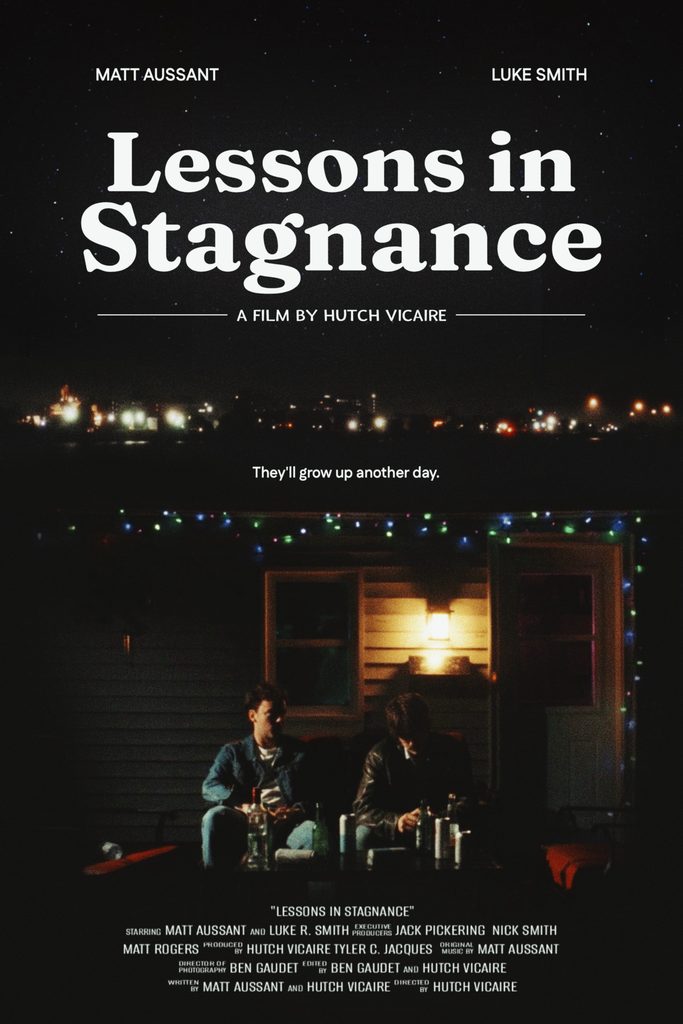
Lessons in Stagnance is available on Letterboxd here!