



By: Quintina Northrup
Women and girls in Afghanistan are in the fight of their lives as their hard-won rights are on the
cusp of being lost.
The literacy rate for females in Afghanistan is 53%, compared with 79% globally. In 2017, there
were 7 girls for every 10 boys enrolled in primary school, which dropped to 6 girls for every 10
boys in secondary school. In jobs that require higher education, women are outnumbered 5 to 1
by men.
But there is hope for the future because of women’s rights champions like Shamsia Hassani.
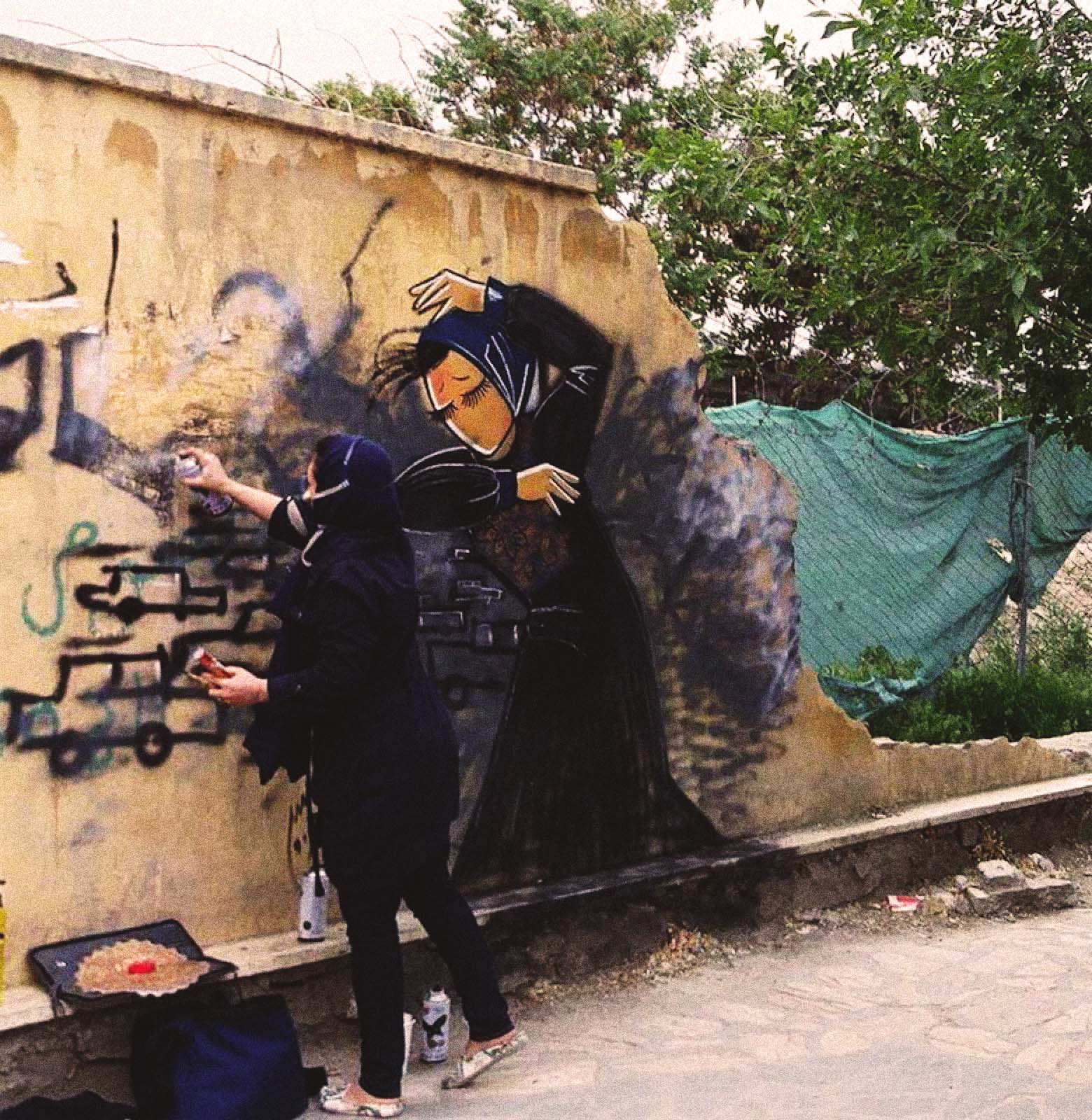
Hassani is standing up for women’s rights in Afghanistan through an unconventional method:
graffiti.
She is a painter and lecturer in Kabul University’s Faculty of Fine Arts. She depicts Afghan
women in a male-dominated society. Her canvases? Thebomb-damaged walls of abandoned
buildings, painted to bring light and colour to the streets of post-war Afghanistan.
We often don’t consider the seemingly simple luxuries of our lives. Freedom of expression, for
example, is something Hassani considers fragile. She fears repercussions each time she sets
out to create something. In an interview with The Creator’s Project, an extension of online
newspaper Vice, she said: “Some people think that art is not allowed in Islam. […] They feel that
they should stop me. And some of them are coming to use bad words [against] me.”
Since 2001, legal changes in Afghanistan – along with increased educational and employment
opportunities – have led to significant advances for Afghan women and girls. The strengthening
of legal protections were bolstered by women lawyers, prosecutors, and judges, and the
establishment of the Elimination of Violence against Women law (EVAW).
The recent withdrawal of US troops from Afghanistan has left the future of women’s rights
particularly uncertain.
The Creator’s Project travelled to Afghanistan to meet with Hassani and explore her
stereotype-challenging works. She revealed that her chosen medium makes the experience of
art more accessible.
“I can introduce art to people because most people can’t go to museums and galleries,” she
said. “[My art] brings women into society again.”
The women in Hassani’s works engage in constructive activities with challenges looming behind
them. She uses this symbolism to empower women to be brave and face adversity head on:
“People will see that [the woman in the artwork] is a woman, and I am a woman. So, if she can
do something, I can do something as well.”
Hassani faced criticism for including the burka in her art, as people believed she would protest
against burkas as part of her activism. But this was not the case.
“The problem is not with the burka,” she explained, “I think freedom is not to take off the burka
[but] to have peace. Even if you take off the burka, you still have a lot of problems like you
cannot do education.”
She continued: “You have no equality, you cannot make decisions. If she takes off the burka,
nothing will change.”
Hassani strongly believes in using her education and platform to change her country.
“A lot of educated people are leaving Afghanistan, and I am feeling very bad because those
educated people could do something for this country […] so I do not want to leave.”
She hopes to redefine the Afghanistan narrative with education and art: “I can introduce a new
Afghanistan to people with seminars [and] with exhibitions. […] Art changes people’s minds and
people change the world.”
To view Hassani’s artwork, visit: https://www.shamsiahassani.net/online-exhibition-2020