



Cover Photo Credit: Alex Prong
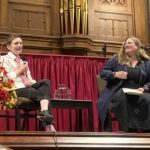
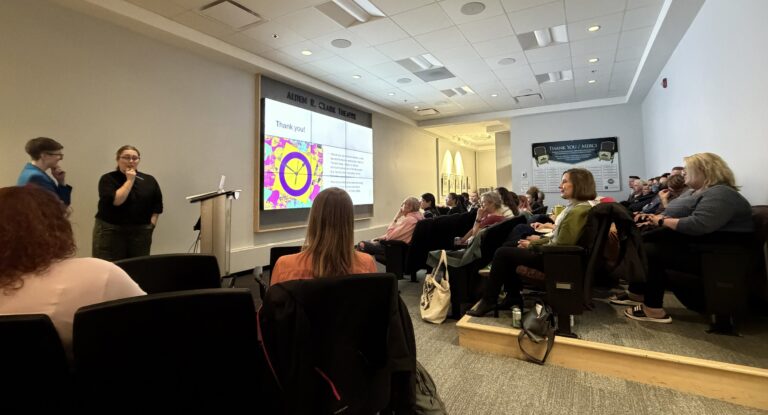
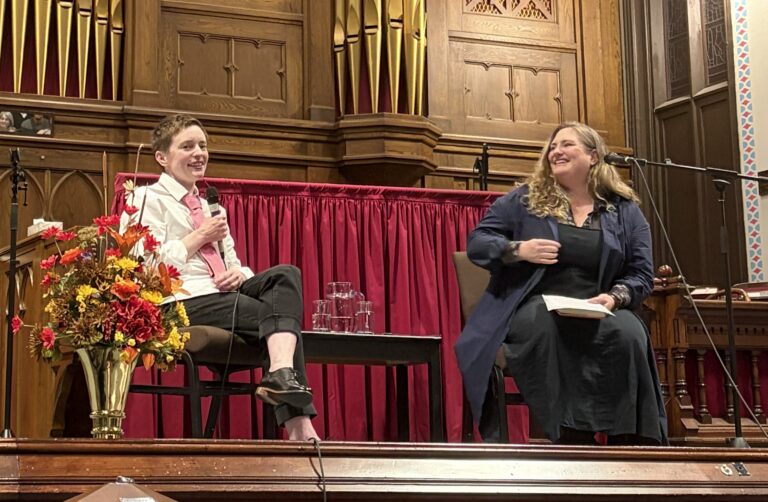
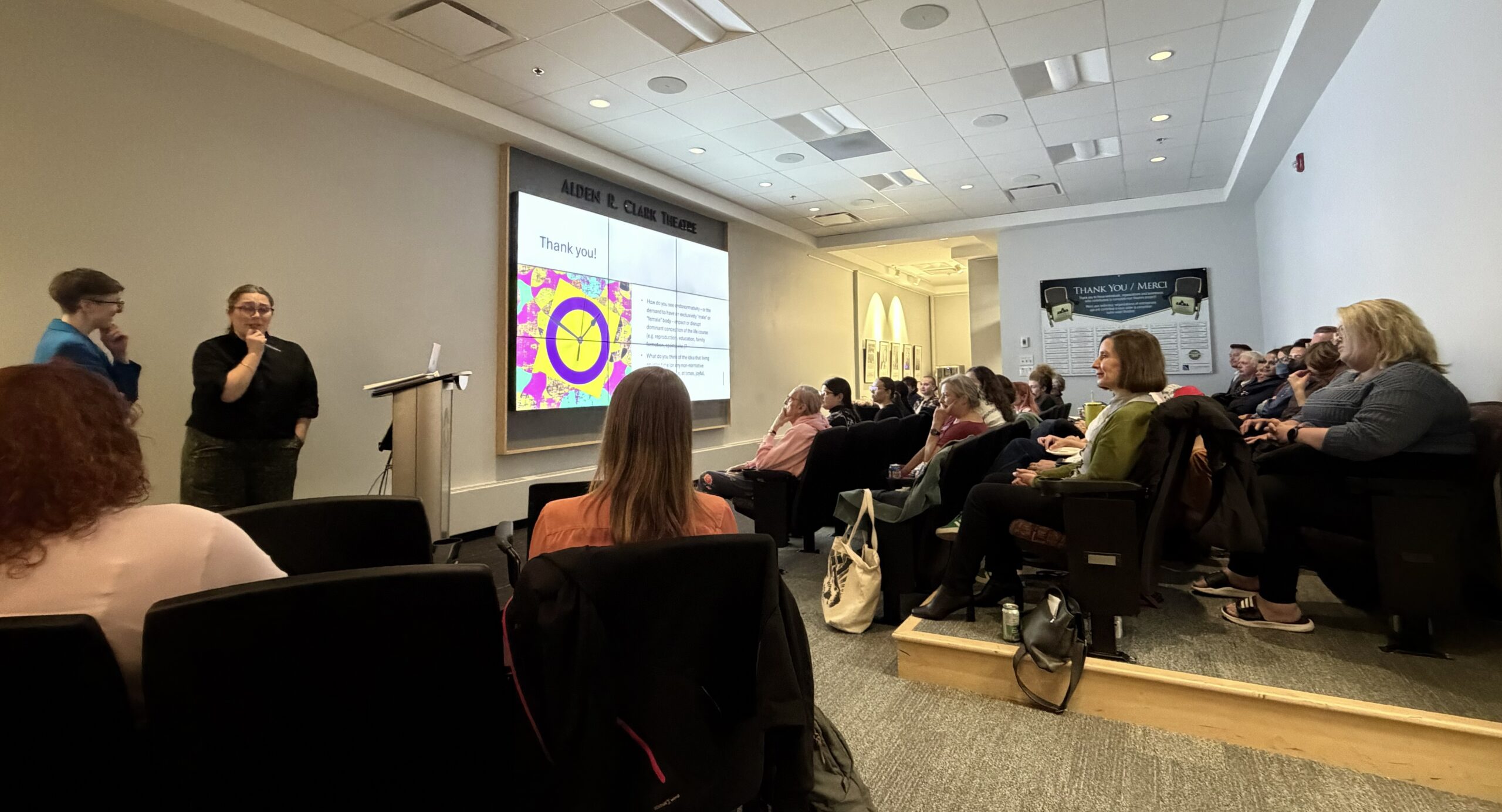
On Tuesday October 20th, 2026, Dr. Celeste Orr gave a talk titled “Temporal Disobedience: Intersex Studies & Chronopolitics” at the New Brunswick Sports Hall of Fame. Their talk follows the success of their award-winning book Cripping Intersex (2022), and the special issue of the journal Feminist Theory on Intersex Joy & Happiness, which Dr. Orr co-edited with Dr. Casey Burkholder.
The premise of Orr’s lecture is that normative discourses position intersex people as temporal disruptions, “outside, behind, or threatening to linear coherent timelines of birth, reproduction, productivity, and death.” What might it mean to stand on the threshold of two things, to embody liminal space itself? This is a central question in Orr’s research, and one that leads them to the conclusion that inter time (between time), can be a source of resistance and joy for intersex and disabled folks, rather than a problem that needs institutional intervention.
Orr’s research is urgent and has real world implications. In their talk they explain:
“The idea that an intersex child can grow up happy without nonconsensual procedures, with a body that does not fulfill the myth of binary sex, is unimaginable for far too many people.”
Inter time is a way of thinking that intervenes in endonormative thought. “Endonormativity” is a term that describes how the world is set up for those who are endosex (not intersex). Orr explains that endosex is to intersex what cisgender is to transgender.
Though Orr’s work is specifically on intersex and disabled lived experience, they connect intersex and disability activism to work on Indigenous and Indigiqueer joy, Black joy, trans joy, crip joy, and others whose ways of living disrupt normative temporal schemes: schemes that would center productivity and reproductivity, and center white supremacy and colonialism.
They remind the audience: “Time isn’t apolitical or objective.”
Orr explains: “Intersex people are not anomalies of the past or problems for the future, but living present realities defying normative timescapes through their being. Being angry at ongoing violence yes, but also being creative, complex, and joyful.”
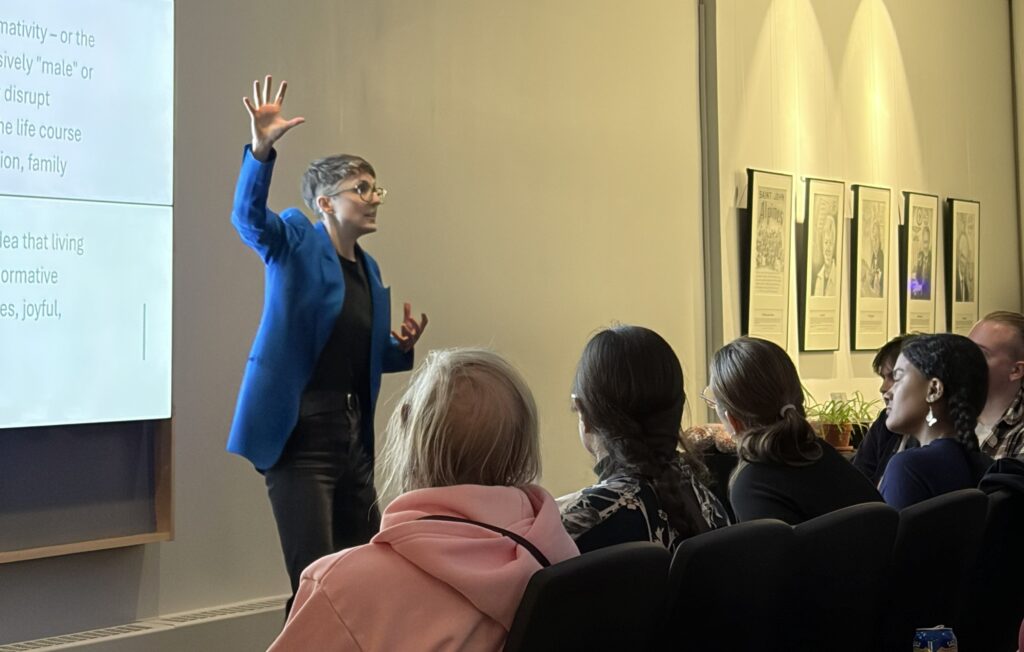
Ultimately, Orr’s talk centers the way that intersex people often have complex relationships with time, and celebrates this fluid, messy, multiplicitous temporal relationship as a space of joy and resistance.
The Queer History Month Lecture is presented yearly by the Department of Historical Studies and the Faculty of Arts at UNB. It is a public lecture, free to attend for anyone in the community. The audience this year was packed with a mix of UNB students, faculty, and community members. A representative of Queer Heritage Initiative of New Brunswick also attended the event, giving opening remarks and encouraging the audience to get involved. If you missed Orr’s lecture, keep an eye out on the NB Media Co-op website for a recording of the lecture.